Selecting the right partners among hydroxypropyl methyl cellulose manufacturers is no longer just about comparing price lists; it is about verifying the precise chemical substitution levels and the consistency of the cellulose ether chain. In high-precision industries like pharmaceuticals and construction chemicals, a minor deviation in viscosity or purity can compromise the structural integrity of a tablet or the workability of a mortar.
The procurement logic for cellulose derivatives has shifted toward a technical-first approach. Buyers are now scrutinizing the production process—from the alkalization of wood pulp to the precise etherification with propylene oxide—to ensure that the final product meets stringent international standards and pharmaceutical pharmacopoeia requirements.
This guide examines the critical technical benchmarks used to evaluate manufacturers and provides a framework for selecting high-performance cellulose solutions that balance disintegration rates, binding strength, and cost-efficiency for industrial applications.

Defining Technical Standards for Cellulose Ether Production

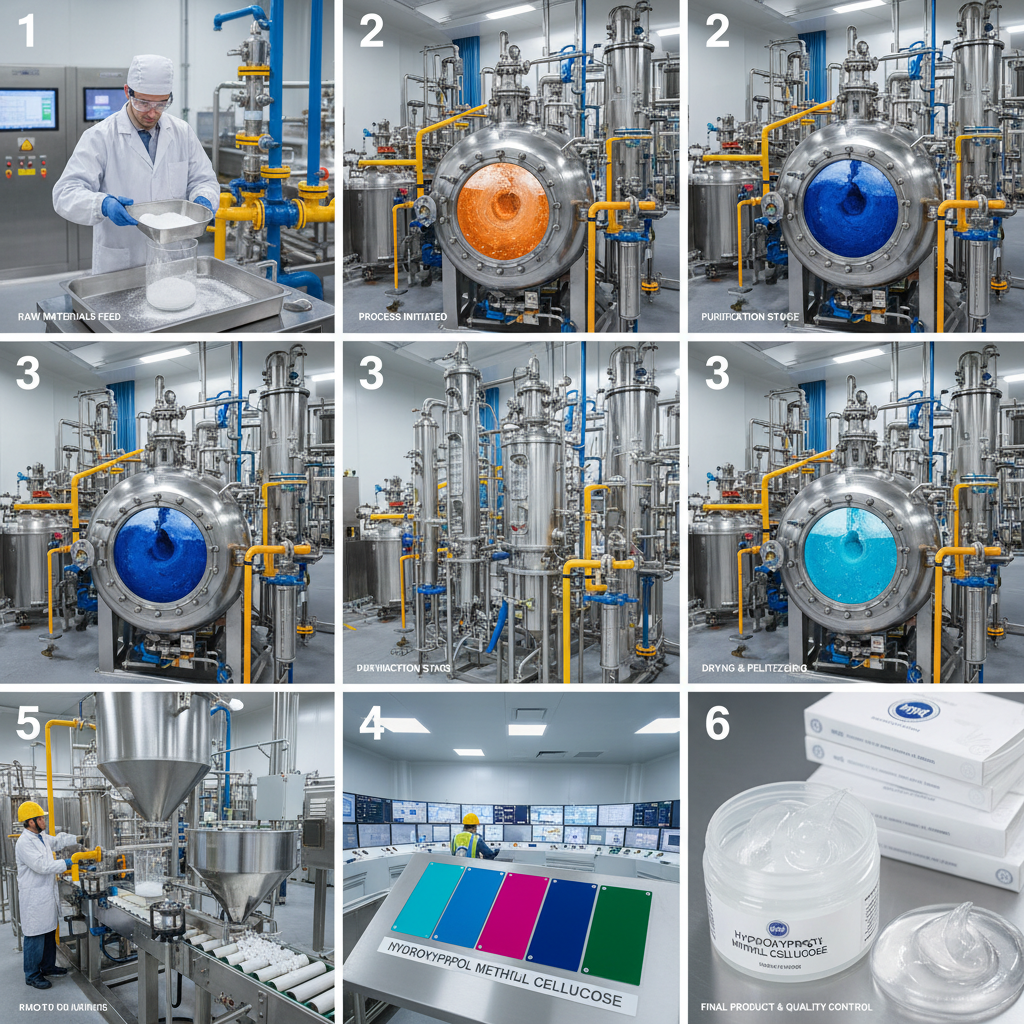
The manufacturing of hydroxypropyl methyl cellulose (HPMC) and its derivatives like Low-Substituted HPC (L-HPC) is a complex process of chemical modification. It begins with the purification of cellulose from wood pulp or cotton linters, followed by a critical alkalization step using sodium hydroxide to increase the reactivity of the cellulose chain.
The essence of quality lies in the etherification reaction, where propylene oxide is introduced under strictly controlled temperature and pressure. For manufacturers, the challenge is maintaining a precise hydroxypropoxyl content—typically between 5.0% and 16.0% for pharmaceutical grades—to ensure the product remains insoluble in water while retaining the ability to swell rapidly.
Beyond the chemical reaction, the neutralization and washing phases are pivotal. Any residual alkali or byproduct can alter the pH value (which should ideally stay between 5.0 and 7.5) and affect the stability of the end-product when mixed with other active pharmaceutical ingredients (APIs) or construction additives.
Core Functional Advantages of Low-Substituted HPC
L-HPC stands out due to its unique physicochemical structure, characterized by a large internal surface area and high porosity. Unlike traditional starch-based disintegrants, L-HPC provides a superior swelling capacity that accelerates the breakup of tablets, significantly improving the bioavailability of the drug.
Moreover, its non-ionic nature ensures that it remains unaffected by the pH fluctuations of gastric and intestinal fluids. This chemical neutrality prevents adverse reactions with a wide range of common drugs, making it a preferred auxiliary material for complex formulations.
From a mechanical perspective, L-HPC acts as both a disintegrant and a binder. It enhances the bonding strength of tablets that are otherwise difficult to form, improving overall hardness and smoothness without sacrificing the speed of dissolution once the tablet enters the biological system.
Industrial Applications and Material Integration Scenarios
In pharmaceutical manufacturing, L-HPC is primarily utilized as a tablet disintegrant and filler. It can be integrated via wet granulation—either as an internal addition or external addition—to optimize the disintegration rate and ensure a fine dispersion of the drug within the body.
Beyond medicine, the broader category of cellulose ethers produced by specialized manufacturers finds extensive use in construction. Products like HPMC and MHEC serve as critical thickeners and water-retention agents in tile adhesives, wall putties, and self-leveling compounds, preventing premature drying and shrinkage cracks.
The versatility extends to other industrial additives. When combined with Redispersible Polymer Powder (RDP) or Polycarboxylate Water Reducers (PCE), cellulose ethers create a synergistic effect that enhances the flexibility and adhesion of building materials, demonstrating the broad utility of a diversified cellulose portfolio.
Comparative Performance Metrics in Tablet Formulation
Evaluating the efficacy of a cellulose manufacturer requires looking at the objective performance of the material in situ. When comparing standard disintegrants to high-grade L-HPC, the most critical metrics are the speed of initial swelling and the resulting hardness of the compressed tablet.
The following data represents a comparative analysis of how specialized L-HPC grades (such as LH-20, LH-21, LH-22) perform against generic industry benchmarks in terms of disintegration speed and tablet hardness stability.
hydroxypropyl methyl cellulose manufacturers Performance Metrics
As indicated, the higher hydroxypropoxyl content in premium grades often correlates with a faster disintegration rate. However, the trade-off is typically a slight reduction in binding hardness, which is why selecting the correct model (e.g., LH-20 for maximum speed vs LH-22 for balanced binding) is essential for formulation success.
Strategic Procurement and Supplier Evaluation Framework
For procurement managers, auditing a manufacturer involves more than checking ISO certifications. It requires a deep dive into the quality control mechanisms, specifically how the manufacturer handles particle size distribution and loss on drying (which should be ≤ 5.0% for high-grade L-HPC).
A critical evaluation point is the manufacturer's ability to provide customized models. For instance, the difference between LH-20 (13.0%-16.0% hydroxypropoxy) and LH-22 (7.0%-9.9% hydroxypropoxy) can determine whether a drug is released in minutes or hours. Suppliers who can precisely calibrate these levels offer significantly higher value.
Finally, consider the supply chain logistics. Manufacturers located near major ports and linked by high-speed infrastructure—similar to the strategic location of the Hebei production hub—can provide more reliable lead times and lower shipping risks for global clients.
Evolution of Chemical Modification in Cellulose Research
The industry is moving toward "Green Chemistry" in cellulose ether production. This includes the adoption of refined wood pulp as a starting material to reduce the environmental footprint and the use of optimized alkalization ratios to decrease chemical waste during the etherification process.
Future innovations are likely to focus on the development of "intelligent" cellulose derivatives—materials that can respond to specific biological triggers, such as pH changes in the lower intestine, to provide targeted drug delivery. This may involve modifying the side-chain length of the hydroxypropyl groups.
Additionally, the integration of automated production lines and world-class testing facilities is allowing manufacturers to achieve a level of purity (reducing arsenic and heavy metal salts to ppm levels) that was previously unattainable, meeting the most rigorous global pharmacopoeia standards.
Selection Matrix for Different Grade Cellulose Ethers
Choosing the correct product grade depends entirely on the desired balance between disintegration speed and structural hardness. The following matrix provides a decision-making guide for selecting between the common L-HPC models based on technical parameters.
When evaluating these options, manufacturers suggest a general dosage of 2-5% for disintegrant purposes, while adhesive applications may require dosages ranging from 2% up to 20% during wet granulation.
| Product Model | Hydroxypropoxyl % | Primary Function | Best Use Case |
|---|---|---|---|
| LH-20 | 13.0% - 16.0% | Rapid Disintegration | Poorly disintegrating tablets |
| LH-21 | 10.0% - 12.9% | Balanced Action | Standard pharmaceutical tablets |
| LH-22 | 7.0% - 9.9% | Enhanced Binding | Hardness-critical formulations |
| HPMC Grade A | Variable | Water Retention | Construction tile adhesives |
| MHEC Grade B | Variable | Thickening Agent | Wall putty and mortars |
| PVA / RDP | N/A | Flexibility/Adhesion | Polymer-modified mortars |
Ultimately, the ideal selection is often reached through trial and error with sample batches. For those evaluating technical specifications or seeking customized cellulose solutions, detailed data is available through www.tangzhihpmc.com.
Frequently Asked Questions
Conclusion
The landscape of cellulose ether production has evolved from basic commodity manufacturing to a precision science. Whether the goal is to accelerate drug release in a pharmaceutical tablet or to ensure the longevity of a construction mortar, the secret lies in the precise control of the chemical substitution process and the purity of the raw materials.
For companies seeking to optimize their formulations, the key is to partner with manufacturers who offer a transparent technical data set and a range of specialized models. Those looking for high-purity cellulose derivatives and professional technical support can find comprehensive solutions through the resources at www.tangzhihpmc.com.