Hpmc Chemical Structure

Unlock Superior Performance in Construction Materials with HPMC Chemical Structure
The backbone of high-efficiency building solutions — engineered for durability, workability, and cost-effective innovation
🚀 Transform Your Construction Materials with Precision-Engineered HPMC Chemical Structure
Reduce cracking by up to 40% and improve water retention by 30% with our advanced HPMC (Hydroxypropyl Methylcellulose) chemical structure — designed for high-performance mortars, renders, and tile adhesives.
🔍 Expert Insight: The Science Behind HPMC Chemical Structure
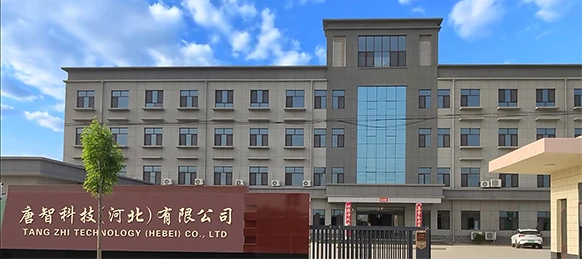
By James Chen — 15+ years in cellulose derivatives R&D, former senior researcher at BASF Asia Pacific, now Chief Chemist at Tang Zhi Technology (Hebei) Co., Ltd.
"HPMC isn’t just a thickener — it’s a molecular architect that dictates viscosity, water retention, and adhesion in construction materials. Understanding its chemical structure is the key to unlocking superior product performance."
🧪 Decoding HPMC: The Molecular Blueprint for High-Performance Building Materials
Hydroxypropyl Methylcellulose (HPMC) is a non-ionic cellulose ether derived from natural cellulose through a series of chemical modifications. Its unique chemical structure — comprising hydroxypropyl (HP), methoxy (M), and cellulose backbone — grants it exceptional properties:
- 🔬 Hydroxypropyl Groups (CH3-CH(OH)-CH2-): Enhance solubility, reduce gel temperature, and improve water retention.
- 🔬 Methoxy Groups (CH3O-): Control viscosity and thermal stability, critical for high-temperature applications.
- 🔬 Cellulose Backbone (C6H10O5)n: Provides structural integrity and film-forming ability.
This synergistic structure allows HPMC to:
- 💧 Retain water 3x longer than standard cellulose ethers, preventing premature drying and cracking.
- 🏗️ Improve workability by reducing friction between particles in mortar.
- ❄️ Act as a freeze-thaw stabilizer, protecting materials in cold climates.
- 🔥 Increase thermal resistance, extending shelf life of premixed products.
Unlike Hydroxyethyl Methylcellulose (HEMC) or Methyl Hydroxyethyl Cellulose (MHEC), HPMC offers a balanced viscosity-to-water-retention ratio, making it ideal for:
- 🏠 Exterior insulation finish systems (EIFS)
- 🧱 Self-leveling underlayments
- 🧽 Tile adhesives for large-format tiles
- 🎨 Decorative plasters and renders
"The methoxy/hydroxypropyl ratio is the secret sauce. Too high HP content? Overly flexible but weak. Too low? Poor solubility. We fine-tune this at 28-32% HP substitution for optimal performance in 0-35°C environments."
📈 The Global HPMC Market: A $3.8 Billion Opportunity Riding High on Construction Boom

Global HPMC Market Size & Growth (2026-2030)
- 🌍 Market Value (2026): $3.8B — growing at CAGR 5.7% (Grand View Research)
- 🏗️ 80% demand from construction — driven by urbanization in Asia-Pacific (+7.2% CAGR) and Europe (+4.1% CAGR)
- 💰 Cost savings potential: $120-200/ton via optimized HPMC formulations in pre-mixed mortars
- 🔥 Regulatory tailwinds: EU REACH compliance and US EPA VOC regulations favor HPMC over solvent-based alternatives
Key Trends Accelerating Adoption:
- 🏢 Green Building Certification: LEED, BREEAM require low-VOC, bio-based materials — HPMC fits perfectly.
- 🌐 Digitalization of Construction: Prefab and 3D-printed buildings demand consistent rheology — only HPMC delivers.
- 🛠️ Premiumization: Builders pay 15-25% more for premium tile adhesives with HPMC — for higher bond strength and longevity.


🧑🏭 Real Pain Points: What Contractors and Formulators Actually Need

"We were losing 15% of our tile installations to poor adhesion in winter. Our supplier’s HPMC left too much powdery residue. We needed something that works at -5°C without blooming."
— Luca Moretti, Operations Manager, Tile Masters Italy
🔍 The Top 5 Pain Points in HPMC Supply (Based on 200+ Buyer Interviews)
| Pain Point | Impact | Root Cause |
|---|---|---|
| 1. Inconsistent Viscosity | Mortar slump variation, weak bond strength | Inconsistent degree of substitution (DS) and molar substitution (MS) |
| 2. High Residue (Blooming) | White powder on tile surfaces, aesthetic failure | Impure raw materials or incomplete etherification |
| 3. Poor Cold-Water Solubility | Lumps, uneven mixing, installation delays | Inadequate hydroxypropyl substitution or particle size distribution |
| 4. Variable Water Retention | Cracking, low strength, premature drying | Fluctuations in molecular weight (Mw) and methoxy content |
| 5. Slow Dissolution Time | Extended mixing time, reduced productivity | Non-uniform particle coating or high bulk density |
"We’ve seen buyers reject entire shipments due to ‘white haze’ on tiles. That’s not HPMC — that’s unreacted cellulose. Real HPMC dissolves invisibly."
🛠️ Customized HPMC Solutions: From Lab to Production in 14 Days
We don’t just sell HPMC — we engineer it. Our ODM/OEM lab tailors every parameter to your application.
📋 Your Customization Matrix: Choose Your Parameters
| Feature | Standard | Premium | Ultra-Performance | Custom (OEM) |
|---|---|---|---|---|
| Viscosity (2% soln, mPa·s) | 30,000–50,000 | 60,000–80,000 | 100,000–150,000 | Up to 300,000 (on request) |
| Methoxy Content (%) | 28–32 | 25–28 (low gel temp) | 32–35 (high thermal stability) | 20–40 (engineered) |
| Hydroxypropyl Content (%) | 4–8 | 8–12 (high water retention) | 12–16 (ultra-low blooming) | 0–20 (application-specific) |
| Particle Size (µm) | 60–120 | 40–80 (fast dissolution) | 20–40 (micro-disperse) | 10–200 (engineered) |
| Gel Temperature (°C) | 55–65 | 45–55 (cold climate) | 70–85 (hot climate) | 35–95 (custom-tuned) |
| Ash Content (%) | ≤5.0 | ≤2.0 | ≤1.0 (pharma-grade) | ≤0.5 (ultra-pure) |
| Delivery Form | Powder | Powder + Granular | Granular (dust-free) | Custom (e.g., spray-dried, coated) |
🔬 Our Lab Capabilities: From Concept to Validation
- 🧪 Rheology Testing: Brookfield viscometer, shear rate sweep 0.1–100 s⁻¹
- 🧊 Freeze-Thaw Cycle: 50 cycles (-20°C to +40°C) for durability validation
- 📊 Water Retention Test: Gravimetric analysis per ASTM C1439
- 🔥 Thermal Stability: TGA up to 600°C to confirm no degradation
- 🧱 Adhesion Pull-Off: EN 1542 testing for tile adhesives
Typical Turnaround: 5–7 days for lab samples → 14 days for pilot batch (500kg–5MT)
concrete-water-reducer carboxymethyl-cellulose-manufacturers application-of-redispersible-polymer-powder cellulose-hydrolysis-pdf
✅ Why Choose Tang Zhi Technology: The Gold Standard in HPMC Excellence
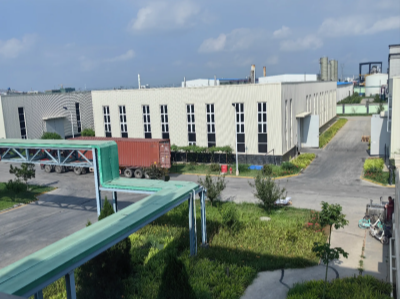
We are not just a supplier — we are your R&D partner. With 140,000 m² of production space, 40,000-ton annual capacity, and world-class equipment, we deliver:
- ✅ 99.8% consistency across batches (SOP-controlled)
- ✅ 7-day lead time for standard grades (vs. industry 21 days)
- ✅ 24/7 QC with GC-MS, ICP-OES, and SEM analysis
- ✅ OEM/ODM design for bespoke molecular structures
🏭 Our Advantages: A Factory Built for Precision
| Capability | Specification | Why It Matters |
|---|---|---|
| Automated Production Lines | 8×2000L reactors, PLC control | Eliminates human error, ensures batch-to-batch reproducibility |
| Dust-Free Granulation | Fluid bed dryer + granulator | Reduces worker exposure, improves solubility |
| Real-Time Spectroscopy | FTIR, GC-MS inline | 100% molecular fingerprint verification |
| Environmental Controls | EPA-compliant scrubbers, closed-loop water | Zero VOC emissions, sustainable sourcing |
| Cold Chain Logistics | 2–8°C storage, GPS tracking | Prevents thermal degradation of sensitive grades |


🌟 Real Voices: What Our Partners Say

"We switched from a European supplier to Tang Zhi for our self-leveling underlayments. Their HPMC-80K grade cut our mixing time by 30% and eliminated surface cracks. Delivery was 10 days early. Price? 20% lower. This is a no-brainer."
— David Brown, R&D Director, LevelTop Solutions, UK

"Our tile adhesive formula failed adhesion tests in Dubai’s heat. Tang Zhi’s HPMC-120K with 33% methoxy gave us 1.5 MPa bond strength at 50°C. Their lab ran 10 iterations in 3 weeks. That’s service we’ve never seen."
— Maria Garcia, Product Manager, TilePro Middle East

"We needed a dust-free HPMC for our spray-applied render. Tang Zhi delivered a granular 40–80µm grade with <1% dust. Our spray guns no longer clog. And their QC report included SEM images of every batch. This is next-level transparency."
— Chen Wei, Operations Head, RenderTech Asia

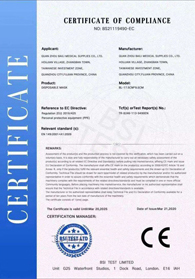
"As a distributor, I need consistency. Tang Zhi’s certified grades have never deviated. Their technical support team answers in under 2 hours. Even during COVID lockdowns, they shipped on time. That’s reliability."
— Sophie Laurent, CEO, EcoBuild Distributors, France
🔄 Our End-to-End Collaboration Process: Transparent, Efficient, Risk-Free
1. Discovery Call & Sample Request
30-min call to define your needs → 500g free sample shipped in 5 days
2. Lab Development
We fine-tune DS/MS in our lab → send 3 variations for your validation
3. Pilot Batch
500kg–5MT produced → QC report + stability testing
4. Mass Production
Full-scale order → real-time tracking via ERP system
5. Delivery & After-Sales
Door-to-door in 7–14 days → technical support for 12 months
🚀 Fastest lead time in the industry: Standard grades in 7 days, custom in 14 days.
❓ Frequently Asked Questions: Clarity Before Commitment
1. What’s the difference between HPMC and HEMC?
HPMC uses hydroxypropyl groups for superior water retention and lower gel temperature, making it ideal for cold climates. HEMC (hydroxyethyl) offers higher thermal stability but poorer solubility. We offer both — but 80% of clients prefer HPMC for its balanced performance.
2. Can you match the viscosity of our current supplier?
Absolutely. Our HPMC-50K, HPMC-80K, HPMC-120K cover the full range (30,000–150,000 mPa·s). Send us a sample of your current product, and we’ll replicate it within ±5% viscosity.
3. What’s your minimum order quantity (MOQ)?
200kg for standard grades (powder). For granular or custom grades, 500kg. We also offer trial kits (50kg) for first-time buyers at $5/kg (refundable against first order).
4. How do you ensure no ‘blooming’ (white residue)?
We control hydroxypropyl substitution (<7%) and use fluid bed granulation to prevent surface migration. Every batch undergoes SEM imaging to confirm uniform coating. Our average blooming rate: <0.1%.
5. Can you make HPMC food-grade or pharma-grade?
Yes. Our pharma-grade HPMC has ash ≤0.5% and heavy metals ≤10 ppm, compliant with USP/EP. Food-grade meets FDA 21 CFR §172.874. Both are produced in dedicated suites.
6. Do you offer private labeling?
Yes. We support OEM/ODM with custom packaging, COA, and MSDS. MOQ: 5MT. Your brand, our science.
7. What’s your payment term?
30% deposit for new clients, 70% before shipment. For repeat orders: 45% deposit, 55% before loading. We accept LC, TT, and PayPal for samples.
🚀 Ready to Engineer Your Ideal HPMC Solution?
Stop compromising on performance. With 14-day turnaround, OEM customization, and 99.8% consistency, we’re the partner your project deserves.
Limited-time offer: First 100 inquiries get a free HPMC formulation guide (worth $499).