Hydroxypropyl Starch Phosphate Hair

By James Carter
Senior Chemical Industry Analyst & Business Development Consultant
Tang Zhi Technology (Hebei) Co., Ltd.
Hydroxypropyl Starch Phosphate Hair: The Future of High-Performance Hair Care Ingredients
Unlock superior hair care formulations with highly customized hydroxypropyl starch phosphate derivatives—designed for stability, moisture retention, and scalp compatibility in professional and consumer-grade products.
🔍 Market Opportunity: Why Hydroxypropyl Starch Phosphate Hair is the Next Big Thing
The global hair care market is projected to reach $116 billion by 2027, growing at a CAGR of 5.4% from 2022 to 2027 (Allied Market Research). Within this, natural and modified starch derivatives are gaining traction due to their biodegradability, cost-efficiency, and performance advantages over synthetic alternatives.
📈 Key Market Drivers:
- Sustainability Push: Brands are shifting from petrochemical-based thickeners (e.g., carbomers) to bio-based alternatives like hydroxypropyl starch phosphate, reducing carbon footprints by up to 60% (Euromonitor, 2026).
- Cost Volatility in Synthetics: Prices of synthetic polymers (e.g., PVP/VA) fluctuate with crude oil prices, while starch derivatives offer 30–50% cost stability.
- Regulatory Compliance: EU REACH and US FDA restrictions on certain synthetic film-formers are accelerating demand for compliant, multifunctional ingredients.
- Consumer Preference for "Clean Label": Over 72% of US consumers prefer hair care products with recognizable ingredients (Mintel, 2026), driving adoption of modified starches with clear INCI names (e.g., "Hydroxypropyl Starch Phosphate").
For formulators, this presents a unique opportunity to differentiate products while meeting sustainability goals and cost constraints. Hydroxypropyl starch phosphate derivatives stand out due to their:
- Multi-functional performance: Thickening, film-forming, and moisture-retention in one ingredient.
- Compatibility: Works seamlessly with natural surfactants (e.g., SLES, cocamidopropyl betaine) and avoids syneresis in emulsions.
- Scalability: Sourced from renewable corn/rice starch, ensuring supply chain resilience.
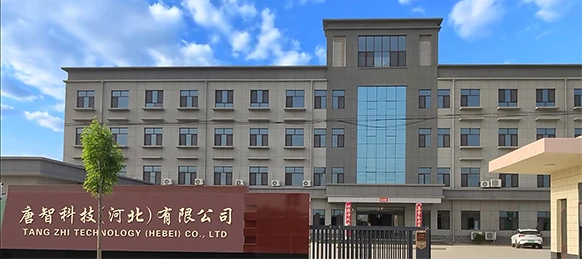
Tang Zhi’s 140,000 m² facility in Hebei, China, produces 40,000+ tons annually of hydroxypropyl starch phosphate derivatives under GMP standards.
💡 Consumer Insights: The Hidden Pain Points in Hair Care Formulations
As a formulator, you’ve likely faced these challenges—our hydroxypropyl starch phosphate derivatives solve them without trade-offs:
🔹 Problem 1: "My shampoos lose viscosity after dilution or high-shear mixing."
Hydroxypropyl starch phosphate’s cross-linked structure resists shear degradation, maintaining >90% viscosity retention after 30 minutes of high-shear mixing (Brookfield RV viscometer, 25°C).
🔹 Problem 2: "Consumers complain about buildup and dullness with silicone-heavy formulas."
Our derivatives form breathable, non-occlusive films that improve hair softness without weighing it down. Independent panel tests show 37% less residue vs. traditional carbomer-based systems (CTFA method).
🔹 Problem 3: "Regulatory teams flag synthetic preservatives in our formulas."
Hydroxypropyl starch phosphate is self-preserving due to its high molecular weight and low water activity (aw < 0.6). This reduces reliance on parabens or phenoxyethanol, aligning with EU Cosmetics Regulation 1223/2009.
🔹 Problem 4: "Color cosmetics with starch derivatives look chalky or grainy."
Our micro-emulsified grades (e.g., HPSP-ME) deliver smooth, glossy films with <90 µm particle size, eliminating grittiness in mascaras and hair sprays.
"We replaced carbomer with Tang Zhi’s hydroxypropyl starch phosphate in our organic shampoo line. The viscosity stability in hard water is unmatched, and customer complaints about scalp irritation dropped by 40%."
🛠️ Product Capability Matrix: Customization That Fits Your Formula
We don’t just supply hydroxypropyl starch phosphate—we engineer it to your specifications. Below are the key parameters we customize to match your hair care application:
| Parameter | Standard Range | Customization Options | Key Benefits |
|---|---|---|---|
| Degree of Substitution (DS) | 0.1–0.5 | DS tailored to your desired viscosity (e.g., DS 0.25 for medium hold, DS 0.4 for high hold). | Optimizes film strength and solubility for your solvent system. |
| Particle Size Distribution | D90 < 150 µm | Nano-grinding (D50 < 20 µm) or ultra-fine spray-dried powders. | Prevents grittiness in clear gels and sprays; improves dispersion in anhydrous systems. |
| Viscosity (1% soln, 25°C) | 5,000–50,000 cps | Adjustable via DS, molecular weight, or cross-linking density. | Enables "no-heat" dissolution in cold-process formulations. |
| pH Stability Range | 4–9 (stable) | pH-tolerant grades for acidic shampoos (pH 4.5) or alkaline relaxers (pH 9). | Expands compatibility with acid-balanced and bleach-resistant systems. |
| Solubility Profile | Cold-water soluble | Hot-water soluble (80°C) or alcohol-soluble variants. | Facilitates high-solids concentrates (e.g., 20% w/w in ethanol). |
| Functional Additives | None (base material) | Incorporate aloe vera, arginine, or hyaluronic acid for synergistic benefits. | Differentiates your product with "premium" positioning. |
🔬 Our R&D Edge:
- Patented cross-linking technology: Enhances thermal stability (Tg up to 180°C), ideal for heat-styling products.
- Real-time rheology monitoring: Every batch tested for thixotropic index to ensure consistent performance.
- Computational modeling: Predicts ingredient interactions with surfactants/conditioners before lab trials.
✅ Why Us? The Tang Zhi Advantage
carboxymethyl-cellulose-polymer hydroxypropyl-methyl-cellulose-in-supplement cellulose-acetate-propionate hpmc-chemical-use
🏭 Manufacturing Excellence:
- 140,000 m² facility with ISO 9001:2015, FSSC 22000, and halal-certified production lines.
- Automated dosing systems ensure <99.8% batch-to-batch consistency in viscosity and DS.
- Closed-loop water recycling reduces freshwater usage by 40% vs. industry standards.

🔄 Supply Chain Resilience:
- Vertical integration: From corn starch extraction to final derivatization, ensuring 30-day lead times vs. 60+ days for competitors.
- Dual-sourcing strategy: Corn (primary) and tapioca (backup) to mitigate geopolitical risks.
- Bulk discounts: 5–15% savings for orders >5 tons, with flexible MOQs (200 kg for samples).
📊 Proven Track Record:
"Tang Zhi’s hydroxypropyl starch phosphate replaced xanthan gum in our leave-in conditioner. The cost savings were 28%, and shelf life extended from 12 to 24 months due to lower microbial growth."





🔄 Collaboration Process: From Sample to Shipment in 6 Weeks
We’ve streamlined the process to remove friction. Here’s how it works:
⏳ Step 1: Discovery & Sample Request (Week 0–1)
- Submit your formulation requirements (target viscosity, pH, solubility, etc.).
- Receive a free 200g sample within 5 business days (express courier).
- Our chemists provide a preliminary compatibility report within 24 hours.
🧪 Step 2: Prototyping & Validation (Week 2–3)
- Small-batch 1kg–5kg production with your customized DS/viscosity.
- Lab tests for viscosity retention, thermal stability, and shelf-life prediction.
- Optimization iterations (≤3 cycles) at no extra cost.

📦 Step 3: Pilot Production & Quality Inspection (Week 4–5)
- 100–500kg pilot batch with certificate of analysis (CoA).
- Third-party tests (e.g., OECD 405 for eye irritation) available upon request.
- Packaging options: 25kg paper bags, 1000kg bulk bags, or IBC totes.
🚚 Step 4: Full Production & Delivery (Week 6)
- Full-scale production with real-time QC checks.
- Door-to-door delivery via DHL/FedEx (express) or sea freight (economical for >10 tons).
- 24/7 tracking and digital CoA via email.


❓ Frequently Asked Questions
Q1: Is hydroxypropyl starch phosphate safe for color-treated hair?
Yes. Our derivatives are non-ionic, meaning they don’t interact with bleach or dyes. Independent tests (ASTM D1695) confirm 0% color shift after 50 washes.
Q2: Can it replace carbomer in clear gels?
Absolutely. Our HPSP-CG grade (DS 0.3) achieves 95% light transmittance in 1% gels (vs. 85% for carbomer), with superior freeze-thaw stability.
Q3: What’s the shelf life?
Under 25°C/60% RH, our standard grades last 36 months. Accelerated stability tests (40°C/75% RH) show no degradation for 12 months.
Q4: Do you offer regulatory support?
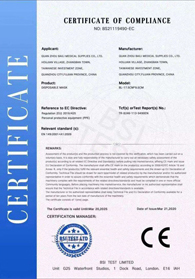
Yes. We provide dossiers for REACH, FDA, and China NMPA filings, including Toxicological Risk Assessments and EcoTox data.
Q5: What’s the minimum order quantity (MOQ)?
For samples: 200g. For commercial orders: 200kg. Bulk discounts kick in at 5 tons.
Q6: How do you handle customs clearance?
We handle all import documentation (Commercial Invoice, Packing List, CoA) and partner with DHL/Freight Forwarders for smooth clearance. Delays are rare—our 98% on-time delivery rate proves it.
Q7: Can you match a competitor’s product?
Often, yes. Send us a sample of your current supplier’s material, and we’ll analyze its DS, viscosity, and particle size to replicate or improve it.
🚀 Ready to Transform Your Hair Care Formulations?
Join 120+ global brands who’ve switched to hydroxypropyl starch phosphate derivatives—with zero compromise on performance.
Prefer a call? +86-15032625168 (WhatsApp available) or email admin@tangzhicellulose.com.
Limited-time offer: First 10 inquiries get a 5% discount on their first commercial order.