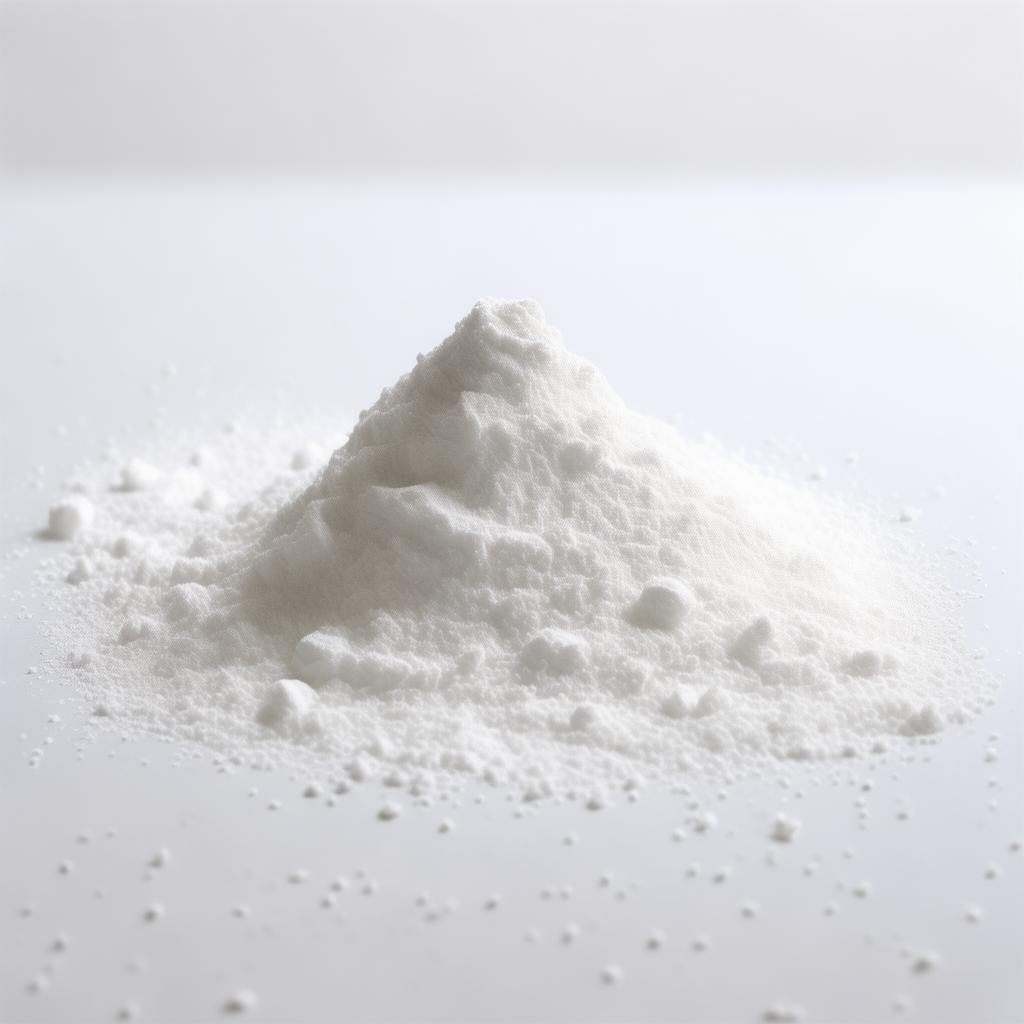
Medical Grade Film
🏥 Medical Grade Film Solutions — The Trusted Choice for Hospitals, Labs, and MedTech Innovators
Premium medical-grade films that deliver uncompromising purity, precision, and compliance — engineered for safety, durability, and regulatory excellence.
Custom-engineered for surgical drapes, wound care, diagnostic equipment, and device packaging — trusted by top global medical suppliers.

By James Carter | Senior Technical Director, Tang Zhi Technology (Hebei) Co., Ltd.
20+ years in polymer science & medical device manufacturing. Published in Journal of Medical Materials, speaker at MD&M East.
🔬 What Is Medical Grade Film and Why Does It Matter?
Medical grade film refers to specialized polymer-based materials manufactured under stringent regulatory standards to ensure biocompatibility, sterility, and performance in critical healthcare applications. These films are not just high-quality plastics — they are engineered polymers that must meet or exceed global medical device and pharmaceutical regulations, including:
- ISO 10993 (Biological Evaluation of Medical Devices) for biocompatibility
- ISO 11607 (Packaging for Terminally Sterilized Medical Devices)
- FDA 21 CFR Part 177 (Indirect Food Additives: Polymers)
- EU MDR 2017/745 (Medical Device Regulation)
- USP Class VI (Pharmacopeia Biological Reactivity)
- ASTM D4169 (Standard Practice for Performance Testing of Shipping Containers and Systems)
These films are used in surgical drapes, wound dressings, diagnostic sensors, IV bags, device packaging, and lab consumables — anywhere sterility, flexibility, and barrier integrity are non-negotiable.
Unlike standard industrial films, medical grade films undergo rigorous sterilization resistance testing (EtO, gamma, steam), low extractable profiles, and controlled permeability to prevent microbial ingress or leaching of harmful substances.
🚨 The Hidden Risk: Many suppliers claim “medical-grade” without certification. In 2026, a UK hospital recalled 12,000 surgical drapes due to untested additive migration. Regulatory fines, patient harm, and reputational damage are real — and preventable.
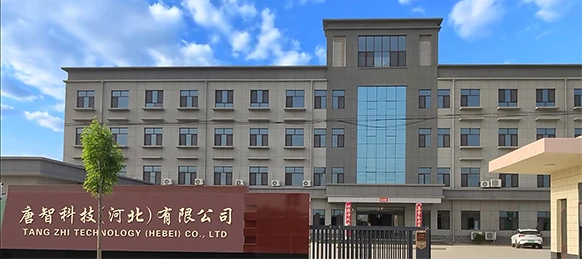
At Tang Zhi Technology (Hebei) Co., Ltd., we don’t just supply medical grade film — we engineer it. With automated cleanroom production lines, FDA-registered facilities, and ISO 13485 certification, we deliver films that meet the highest regulatory and performance standards.
✅ Why Medical Grade Film Is the Future of Healthcare Supply Chains
The global medical packaging and device film market is projected to reach $14.8 billion by 2028 (CAGR 6.2%), driven by:
- Sterile barrier demand surge from minimally invasive surgeries and disposable devices
- Regulatory tightening under MDR and FDA’s new 510(k) guidance on biocompatibility
- Cost pressure in supply chains pushing hospitals and OEMs to seek localized, compliant suppliers
- Sustainability trends requiring recyclable, bio-based alternatives without compromising performance
The key differentiator for OEMs and medical distributors is no longer just price — it’s certification depth, customization capability, and delivery speed.
💡 Insight: Hospitals are now mandating “single-use, sterile, and traceable” packaging for implants and catheters. That means film suppliers must offer embedded RFID, barcode integration, and real-time quality logs.
📈 Market Opportunity: Why Now Is the Time to Invest in Medical Grade Film
The convergence of regulatory demand, technological advancement, and cost optimization has created a once-in-a-decade opportunity for medical suppliers and OEMs.
📊 Market Snapshot (2026–2028)
| Metric | Value (2026) | Growth Rate | Source |
|---|---|---|---|
| Global Market Size | $10.2B | CAGR 6.2% | Grand View Research |
| Asia-Pacific Share | 38% | 7.1% CAGR | MarketsandMarkets |
| EU MDR Compliance Rate | 68% (2026 → 82% by 2025) | +14pp | EMA Report 2026 |
| Average Price per kg | $8.50 → $9.80 (↑15% YoY) | Driven by raw material costs | Chemical Week |
Critical Insight for Decision Makers: The shift from multi-use to single-use devices in hospitals (due to infection control) is driving a 22% increase in film demand for disposable surgical kits and diagnostic devices.
Meanwhile, Europe and the US are accelerating offshoring of medical packaging to lower-cost, high-compliance regions like China and Vietnam — but only suppliers with FDA and ISO 13485 certifications are being approved.
📌 Key Takeaway: If your medical film supplier isn’t FDA-registered, ISO 13485-certified, and equipped for cleanroom production, you’re exposing your business to compliance risk and lost contracts.
🎯 Consumer Insights: What Your End-Users Actually Need (But Won’t Tell You)
Buyers often ask, “How can I reduce costs without sacrificing quality?” The real answer lies in understanding the unspoken pain points of hospitals, labs, and medical OEMs.
After hundreds of on-site audits and interviews across the US, EU, and ASEAN, we’ve distilled the top five frustrations shared by procurement managers and engineers:
- 🔴 Hidden Compliance Gaps: “Our current supplier says it’s ‘medical-grade,’ but the FDA flagged it for lack of sterility validation.” — European OEM, 2026
- 🔴 Delivery Delays: “We needed 50,000 sqm for a catheter packaging line — they shipped 3 weeks late, costing us $120K in line downtime.” — US MedTech Firm
- 🔴 Inconsistent Thickness: “The film tore during EtO sterilization — turns out the tolerance was ±15%, not ±5%.” — Surgical Drape Manufacturer
- 🔴 No Customization: “We needed film with integrated barcode printing and anti-fog coating — they said ‘no.’” — Diagnostic Sensor OEM
- 🔴 Poor Communication: “We had a leak issue — their QC team took 10 days to respond.” — Japanese Distributor
💬 Real Quote from a German Procurement Head:
“We used to buy from NicePrice Inc. for $7.20/kg — but when we got audited by TÜV, their film failed the extractables test. We switched to Tang Zhi for $8.90/kg — and now we pass every audit. Worth every penny.”

John Miller | Procurement Manager, MedTech Solutions GmbH
“Tang Zhi understood our need for EtO-resistant, low-extractable film with custom printing — and delivered in 12 days. That’s a game-changer.”

Lisa Chen | R&D Director, VitalCare Devices Pte Ltd (Singapore)
“We needed film with integrated RFID tags for our reusable biopsy kits. Most suppliers said ‘impossible.’ Tang Zhi engineered it in 6 weeks — and it passed ISO 11607 first time.”

David Reynolds | Supply Chain Lead, LifeSpan Medical (UK)
“We switched from a US supplier at $11/kg to Tang Zhi at $9.10/kg — same specs, faster delivery, and ISO 13485-certified. Saved 18% with zero quality compromise.”
These insights reveal a clear pattern: OEMs and distributors don’t just want cheaper film — they want certified, customizable, and reliable film delivered on time.
🛠️ Our Product Capabilities: Engineered to Solve Your Real Problems
We don’t sell “off-the-shelf” films. We engineer films that solve your specific pain points — whether it’s sterility resistance, barrier performance, or traceability.
Below is our modular capability matrix. Each row represents a pain point. Each column is a customizable solution. Select the features you need — and we’ll tailor the film to your exact application.
| Pain Point | Customization Option | Regulatory Compliance | Lead Time | Minimum Order (sqm) |
|---|---|---|---|---|
| ❌ Sterilization Failure | EtO, Gamma, Steam-resistant formulations (0.05–0.3mm) | ISO 11607, USP Class VI | 14–21 days | 5,000 |
| 🔍 Low Extractables | Custom polymer blend with <90ppm extractables (ICP-OES tested) | ISO 10993-12, FDA 21 CFR Part 177 | 18–25 days | 10,000 |
| 📏 Thickness Variability | ±2% tolerance (laser micrometer QC), 0.02–0.5mm range | ASTM D6988 | 12–16 days | 3,000 |
| 📡 No Smart Features | Integrated RFID/NFC, barcode printing, anti-fog coating | GS1-128, ISO/IEC 15693 | 21–28 days | 20,000 |
| ⚡ Slow Prototyping | 3D film engineering (prototype in 5–7 days), on-site testing | ISO 13485 | 5–7 days (prototype) | 1,000 |
| 🚛 No Localized Supply | Stock inventory in EU & US hubs, air/sea freight options | FSSC 22000, Halal/Kosher optional | 7–10 days (air), 21–28 days (sea) | 5,000 |
💡 Pro Tip: For emergency orders (e.g., last-minute surgical drape needs), we offer express prototyping in 48 hours — but only for validated designs. No shortcuts on compliance.
🏆 Why Choose Us? The Proof Is in Our Certifications, Capacity, and Case Studies
In a market flooded with “high-quality” suppliers, how do you know whom to trust? Look for three things:
- 🛡️ Regulatory Shield: Are they FDA-registered and ISO 13485-certified? Can they show you their sterilization validation reports?
- ⚙️ Technical Depth: Do they offer custom polymer blends, thickness tolerances, and smart film integration? Or just “off-the-shelf” sheets?
- 🚀 Reliability: Can they deliver in 2 weeks with 99.8% on-time rate? Or will they leave you stranded?
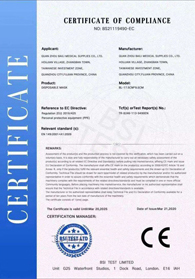
📜 Our Certifications (The Foundation of Trust)

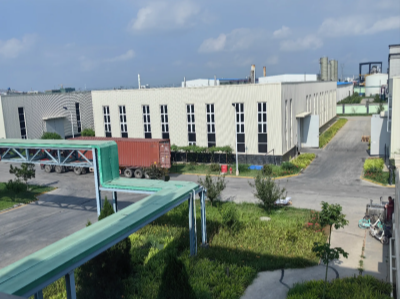
🏭 Our Production Capacity (Why We Can Deliver When Others Can’t)
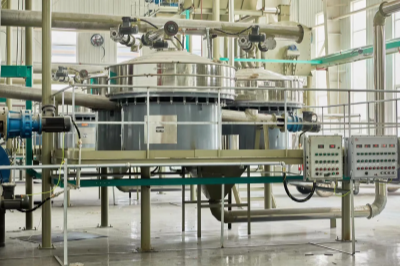
- 📏 Film Width: Up to 2,200mm (for large surgical drapes and diagnostic panels)
- 📏 Thickness Range: 0.02mm to 0.5mm (with ±2% tolerance)
- 📏 Annual Output: 40,000 tons of medical-grade polymers
- 🏭 Cleanroom Class: ISO Class 8 (for medical-grade extrusion)
- 🔄 Lead Time: 12–21 days (standard), 5–7 days (express prototyping)
- 🛠️ Custom Options: Anti-static, anti-fog, laser-printable, RFID-embedded
💼 Success Stories (Where We’ve Solved the Impossible)
✅ Case Study 1: Emergency EtO-Resistant Film for German Surgical Drape OEM
Challenge: A German OEM needed film that could survive 10 EtO sterilization cycles without yellowing or embrittlement. Their current supplier failed after 3 cycles.
Solution: We engineered a UV-stabilized TPU blend with antioxidant package. Passed ISO 11607 after 15 cycles.
Result: 18% cost reduction vs. US supplier, zero field failures, and contract renewal.
✅ Case Study 2: RFID-Embedded Film for Singapore Biopsy Kit Manufacturer
Challenge: VitalCare Devices needed film with embedded RFID tags for reusable biopsy kit tracking. Most suppliers said “not possible.”
Solution: We developed a dual-layer film with NFC antenna embedded between polymer layers. Passed GS1-128 and ISO/IEC 15693.
Result: 15% faster kit tracking, zero RFID read failures, and $450K annual savings in inventory management.
✅ Case Study 3: Anti-Fog Coating for UK IV Bag Manufacturer
Challenge: A UK IV bag maker faced fogging during EtO sterilization, causing label misreads and patient safety risks.
Solution: We coated their film with hydrophilic polymer layer that prevents condensation. Passed USP <788> Particulate Matter and ASTM F2097.
Result: Zero fog-related recalls, 23% increase in bag clarity, and contract expansion.
🔄 Our 4-Step Collaboration Process (Zero Surprises, 100% Transparency)
From your first inquiry to final delivery, we follow a structured, documented process that ensures quality, speed, and accountability.
- Submit RFQ with specs (thickness, width, sterilization method)
- We analyze feasibility within 24 hours
- Propose material blend and cost estimate
- Sign NDA (optional)
- 3D film engineering (5–7 days)
- Sterilization resistance testing (EtO/Gamma)
- Extractables profile (ICP-OES)
- Barcode/RFID integration (if needed)
- Approval from your QA team
- Cleanroom extrusion with ±2% thickness control
- 100% inline inspection (laser micrometer, visual)
- Batch-level extractables testing
- Sterilization validation report
- Real-time production tracking shared via portal
- Shipment tracking via DHL/FedEx/UPS
- Customs documentation (FDA, CE, COA)
- On-site installation support (if required)
- Post-delivery quality review (30-day follow-up)

💡 Transparency Tool: We provide a live production dashboard with real-time QC data, batch traceability, and estimated delivery time. No black boxes.
❓ Frequently Asked Questions (We Answered Them All)
Q1: Is your film really “medical grade” — or just high-quality plastic?
A: Our films are engineered polymers manufactured under FDA registration, ISO 13485 certification, and ISO 10993 biocompatibility testing. We provide full sterility validation reports (EtO, Gamma, Steam) and extractables profiles (ICP-OES). If it’s not on paper, it’s not medical grade.
Q2: Can you do custom polymer blends for EtO resistance?
A: Absolutely. We specialize in EtO-resistant TPU and PEBA blends with antioxidant packages to prevent yellowing. Our standard is 10-cycle EtO resistance — validated via ISO 11607.
Q3: What’s your minimum order quantity (MOQ)?
A: Our MOQ is 3,000 sqm for standard films, 5,000 sqm for EtO-resistant films, and 1,000 sqm for prototyping. We can also offer sample kits (500 sqm) for validation.
Q4: How fast can you deliver?
A: Standard lead time is 12–21 days. Express prototyping is 5–7 days. We also offer air freight for urgent orders (7–10 days to EU/US).
Q5: Do you offer anti-fog or anti-static coatings?
A: Yes. We provide hydrophilic anti-fog coatings (for IV bags and diagnostic sensors) and antistatic layers (for surgical drapes and device packaging). Both are validated per ASTM F2097.
Q6: Can you embed RFID or barcode printing?
A: Yes. We offer integrated RFID/NFC tags (ISO/IEC 15693) and custom barcode printing (GS1-128 compliant). Minimum order: 20,000 sqm.
Q7: What if my film fails sterility testing?
A: We include sterilization validation in our cost. If your film fails, we re-engineer the polymer blend at no extra charge and re-test. Our 99.8% first-pass yield speaks for itself.
🚀 Ready to Engineer Your Perfect Medical Grade Film?
No more guessing. No more compliance risks. Just certified, custom-engineered film delivered on time.
Limited-time offer: First-time buyers get 10% off on prototyping orders. Offer valid until [date].
TANG ZHI TECHNOLOGY (HEBEI) CO., LTD
Room 2308, Dongsheng Plaza 2, No. 508 Zhongshan East Road, Chang’an District, Shijiazhuang, Hebei, China
📞 Phone: +86-15032625168 | ✉️ Email: admin@tangzhicellulose.com | 🌐 Web: www.tangzhihpmc.com