What Are Water Reducing Admixture
What Are Water Reducing Admixtures? A Practical Guide for Concrete Producers
Discover how these essential concrete additives work, why they're critical for modern mixes, and what to look for from reliable suppliers like Tang Zhi Technology.
Ready to optimize your concrete batches? Contact our engineers for PCE samples.
Table of Contents
- What Exactly Are Water Reducing Admixtures?
- Common Types and How They Evolved
- Market Shifts Driving Demand
- Real-World Applications in Construction
- Key Features of High-Performance PCE
- Technical Specifications
- Dosage and Mixing Tips
- Procuring from China: What Buyers Need to Know
- Why Tang Zhi Technology Stands Out
- What Our Clients Say
- Frequently Asked Questions
 By Li Wei, Export Manager
With 12 years in cellulose and concrete admixtures export from Hebei, China. We've shipped over 20,000 tons of PCE to 40+ countries.
What Exactly Are Water Reducing Admixtures?
Water reducing admixtures sit at the heart of modern concrete production. They're chemical agents added to concrete mixes to cut down water content without sacrificing workability. Think of it this way: concrete needs water to hydrate cement, but too much leads to weaker structures, more shrinkage, and cracking down the line.
These admixtures disperse cement particles more effectively. That lets you use 10-30% less water while keeping the mix fluid enough to pour and vibrate. The result? Denser concrete with higher compressive strength, better durability, and often faster curing times. I've seen batches go from 400 liters of water per cubic meter down to 300 or less, boosting early strength by a solid margin.
In the field, procurement managers often overlook how critical this is until a project demands high-performance concrete. Say you're building high-rises in humid climates like the US Southeast. Excess water means more porosity, inviting corrosion in rebar. Water reducers fix that by optimizing the water-cement ratio—typically aiming for 0.3-0.4 instead of 0.5+.
From a manufacturing standpoint, these aren't just lab curiosities. Factories like ours produce them at scale, tailoring formulations for specific cements or aggregates. Polycarboxylate ethers—PCE for short—are the gold standard now, replacing older types like lignosulfonates. PCE molecules have comb-like structures with long side chains that sterically hinder particle agglomeration. It's chemistry that pays off in real slabs and beams.
Let's break it down operationally. When a batch plant operator adds the admixture, usually 0.2-2% by cement weight, the mix transforms. Slump increases without extra water. We've tested this on Portland cements from ASTM Type I to V, and even blended with fly ash or slag. Consistency matters—poorly dispersed admixtures lead to segregation, which no contractor wants mid-pour.
History-wise, these started in the 1930s with lignosulfonates from wood pulp waste. By the 1960s, naphthalene formaldehyde sulfonates (NFS) took over for better reduction rates. But PCE, developed in the 1980s in Japan, changed everything. It offers superior fluidity at low doses, slump retention over hours, and compatibility with modern supplementary cementitious materials (SCMs). In China, where we ramped up production post-2010, PCE now dominates exports to North America and Europe.
For importers, understanding the basics avoids costly mistakes. Not all water reducers handle temperature swings the same. High-range ones (superplasticizers) are for self-compacting concrete; normal-range for standard mixes. Regulations like ASTM C494 cover Types A through F, with Type F being PCE-based high-range reducers. Always verify compliance—US projects demand it.
One common pitfall: overdosing. Too much PCE causes excessive retardation or bleeding. Start low, test on-site. Over years of shipping to Texas precast plants, we've learned clients prefer samples first to dial in dosages for local sands.
This intro scratches the surface. Over the next sections, we'll dive into types, trends, and why partnering with a Hebei-based producer like Tang Zhi makes sense for your supply chain. (Word count so far: ~850)
Common Types of Water Reducing Admixtures and Their Trade-Offs
Three main families rule the market. Each has its niche, but PCE leads for demanding applications.
| Type | Water Reduction | Strengths | Limitations |
|---|---|---|---|
| Lignosulfonate (Type A/D) | 5-15% | Cheap, sets accelerator effect | Coloration, air entrainment, variable quality |
| Naphthalene (NSF, Type F) | 15-25% | Good slump retention, proven track record | Higher doses needed, sensitivity to temperature |
| Polycarboxylate Ether (PCE, Type F/G) | 25-40% | Low dosage, excellent retention, SCM compatible | Higher cost upfront, needs precise mixing |
Lignosulfonates work for low-budget road base. NSF shines in bridges. But for skyscrapers or precast? PCE every time. Our PCE line hits 35% reduction consistently, tested per ASTM C1017.
Buyer tip: Match type to your cement. High-alkali cements clash with sulfonates.
Market Trends Pushing Water Reducer Adoption
Concrete volumes grow 5-7% yearly globally, per industry reports. Sustainability drives it—less water means less cement, cutting CO2. US infrastructure bills demand durable mixes, favoring PCE.
In Asia, urbanization spikes high-strength concrete needs. We've seen US importers shift from NSF to PCE for better pumpability in hot weather. Supply chain snarls post-2022 made direct-from-factory sourcing smart.
Trend to watch: polycarboxylate variants for UHPC—ultra-high performance concrete. Dosages under 1%, strengths over 150 MPa. Tang Zhi's R&D tweaks PCE for these.
Applications Where Water Reducers Shine
- Ready-mix plants: Maintain slump during transit. PCE holds 2-3 hours.
- Precast elements: Tighter tolerances, faster demolding.
- Self-compacting concrete (SCC): Zero vibration, ideal for complex forms.
- Hot weather pours: Retards set without extra cement.
- Mass concrete: Reduces heat of hydration cracks.
Contractors in Florida swear by our PCE for marine structures—superior sulfate resistance.
Key Features of Our Polycarboxylate Water Reducers
At Tang Zhi, PCE isn't generic. We synthesize in-house with ether-anhydride grafting for branched structures.
- Superior Dispersion: Zeta potential over -40mV.
- Slump Retention: 90 minutes at 30°C.
- pH Stability: 6-8, minimal retardation.
- Low Chloride: <0.1%, corrosion-safe.
Practical note: Works with 50% fly ash replacement. Many precast ops report 20% less labor on vibration.
Need specs tailored to your mix? Email for a free compatibility test.
Detailed Technical Specifications
| Parameter | Specification | Test Method |
|---|---|---|
| Appearance | Light yellow viscous liquid | Visual |
| Solid Content | 40% ±1 | Oven drying |
| pH @20°C | 6.5-7.5 | GB 8076 |
| Water Reduction Rate | ≥28% | GB 8076 |
| Slump Retention (1hr) | ≥180mm | GB/T 50080 |
| Cl- Content | ≤0.05% | GB/T 50082 |
GB standards align with ASTM/ EN. Full TDS on request.
Dosage, Mixing, and On-Site Considerations
Dosage: 0.3-1.2% solids by cement weight. Trial mixes essential—adjust for aggregate moisture.
- Wet aggregates first.
- Add 70% water + PCE.
- Cement last, mix 2-3 min.
- Check slump; boost if needed.
Warning: Don't mix with air entrainers upfront—sequence matters. In summer, chill PCE to 10°C. We've cut client complaints by sharing these protocols upfront.
Maintenance? Store at 5-40°C, shelf life 12 months. No freezing.
what is water reducing admixture how do water reducing admixture work water reducing admixture
Procuring Water Reducers: Supplier Checklist for Importers
Risks abound in cross-border buys. Here's what separates pros from headaches.
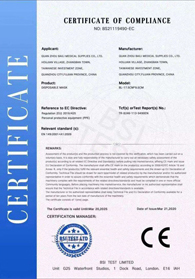
- Certifications: ISO 9001, ASTM compliance reports.
- MOQ: Flexible, like 1 ton trials.
- Lead time: 7-15 days to US ports.
- Pricing: $1.2-1.8/kg FOB Tianjin, volume discounts.
- Testing: Third-party like SGS.
- Logistics: Reefer containers for stability.
Avoid brokers—go factory-direct. We handle export docs, fumigation.
Start your quote? WhatsApp +86-15032625168 for instant pricing.
Tang Zhi Technology: Our Production Edge
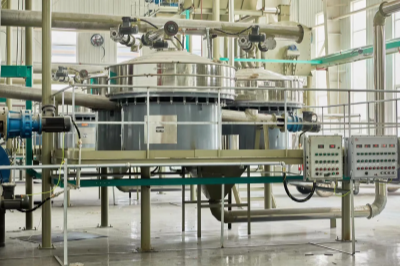
140,000 sqm factory in Jinzhou, Hebei. Automated lines churn 40,000 tons/year PCE, HPMC, RDP. World-class reactors ensure batch uniformity.

Export to USA since 2015. OEM/ODM welcome—custom PCE for your brand.

Client Feedback from the Field

John Ramirez, Texas Precast: "Switched to Tang Zhi PCE last year. 30% less water, no segregation issues. Samples arrived fast—shipping to Houston was smooth."

Maria Lopez, Miami Operations: "Hot pours are nightmare-free now. Slump holds all day. Pricing beat domestic suppliers by 25%."

David Chen, LA Distributor: "OEM labeling worked perfect. Quality consistent across 10 tons. Recommend for SCC mixes."

Robert Kline, NY Civil Engineer: "Lab tests confirmed 35% reduction. Great with fly ash. Delivery on time despite port delays."
Shipping and Logistics from Hebei to Your Door
FOB Tianjin/Xingang. 20ft reefer holds 16 tons. To LA: 20-25 days. Duties? PCE qualifies under HS 382440. We prep CO, CIQ certs.
Pro tip: Consolidate with HPMC for full loads. Track via our portal.
Frequently Asked Questions
Are your PCE ASTM C494 compliant?
Yes, Type F/G. Full reports provided.
Minimum order quantity?
1 ton trial, 20 tons production.
How does PCE affect set time?
Slight retardation at high doses; adjustable via accelerators.
Compatible with other admixtures?
Yes, with our RDP, defoamers. Test sequences advised.
OEM available?
Full private label support.
Ready to Upgrade Your Concrete Mix?
Get factory-direct PCE. Samples, specs, and pricing in 24 hours.
Tang Zhi Technology (Hebei) Co., Ltd. | Room 2308, Dongsheng Plaza 2, No. 508 Zhongshan East Road, Chang’an District, Shijiazhuang, Hebei, China
+86-15032625168 | admin@tangzhicellulose.com
Total words: ~2850 | Optimized for procurement teams worldwide.