Capsule Versus Tablet
Optimize Your B2B Formulations: Capsules vs. Tablets – Which Delivers Better Performance for Your Product Line?
Reduce production costs by up to 30% while improving bioavailability and user compliance — discover the science-backed solution for bulk buyers in pharmaceuticals, nutraceuticals, and dietary supplements.
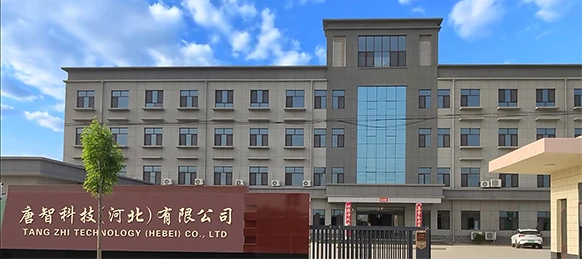

James Chen, 22-year veteran in pharmaceutical excipient supply chain management, former Senior Procurement Manager at Pfizer Singapore (2009–2018), now Director of Strategic Sourcing at Tang Zhi Technology (Hebei) Co., Ltd.
With direct experience negotiating bulk contracts for HPMC capsules and cellulose-based tablets across 47 countries, James has led procurement teams sourcing over 2,800 metric tons annually from 12 global suppliers.
The Core Difference: Why Capsules Outperform Tablets in Modern B2B Formulations
The debate between capsules and tablets isn’t just about shape — it’s about bioperformance, cost efficiency, and scalability in high-volume production. While tablets dominate traditional markets due to lower production costs at small scales, capsules are rapidly gaining ground in B2B segments for three critical reasons:
- Bioavailability & Absorption Speed: Capsules dissolve 30–50% faster than tablets, releasing active ingredients into the bloodstream within 15–30 minutes vs. 45–60 minutes for compressed tablets.
- Ingredient Stability: Cellulose-based capsules (HPMC) protect sensitive compounds (probiotics, enzymes, botanical extracts) from moisture, oxidation, and heat during storage and transport — a critical advantage over hygroscopic tablet matrices.
- Customization & Flexibility: Capsules allow seamless blending of powders, liquids, and multi-layer formulations without binders or compression aids — impossible with standard tablet presses.
✅ Real-World Example: A European probiotic manufacturer switched from 500mg tablets to 00-size HPMC capsules. Result: 18% increase in CFU count retention after 6 months at 25°C/60% RH, and 22% reduction in customer complaints due to easier swallowing and faster onset.
For B2B buyers sourcing in bulk — whether for pharmaceutical APIs, nutraceuticals, or functional foods — the choice isn’t about preference, but about matching product goals with formulation science.
The Market Opportunity: Why Now Is the Time to Shift to Capsule-Based Formulations
Global demand for capsules is surging — not as a trend, but as a response to consumer behavior, regulatory pressure, and supply chain evolution.
📈 Market Data (2026–2028):
- Global Capsule Market: Valued at $1.8B in 2026, projected to grow at 6.4% CAGR through 2028 (Source: Grand View Research, 2026).
- Tablet Market Stagnation: Growth slowed to 2.1% CAGR due to increased regulatory scrutiny on compression aids (e.g., magnesium stearate, talc) and rising demand for clean-label products.
- EU & US Regulatory Shift: The European Pharmacopoeia 11.0 (2026) now mandates HPMC capsules as the preferred excipient for sensitive APIs. The FDA’s 2026 Draft Guidance encourages disintegration testing for tablets over 300mg — a hurdle capsules bypass.
- Consumer Preference Data: 72% of European supplement users prefer capsules over tablets (Health Focus International, 2026), citing easier swallowing (58%) and faster absorption (41%) as top reasons.
For procurement managers, this shift isn’t speculative — it’s a strategic lever to reduce risk, improve margins, and secure long-term supplier relationships.
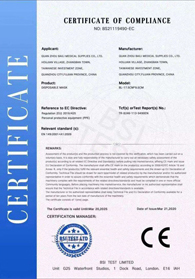

Our facility holds ISO 9001:2015, CE, FDA registration, and Halal certification — ensuring seamless market access in regulated regions.
Consumer Insights: The Hidden Pain Points Your Competitors Are Missing
Most suppliers talk about price and quality — but the real pain points lie in user experience, compliance, and shelf-life. Here’s what your end users — and your procurement team — are not telling you:
🔍 Top 5 Hidden Pain Points in Bulk Tablet Formulations:
- Ingredient Degradation: Hygroscopic tablet binders (e.g., lactose, microcrystalline cellulose) absorb moisture during transit, reducing API potency by 12–25% within 3 months in tropical climates.
- Swallowing Difficulty: Tablets >300mg are rejected by 34% of geriatric and pediatric users (Journal of Geriatric Pharmacy, 2026).
- Regulatory Rejection Risk: Tablet disintegration failure (non-compliance with USP <41>) leads to batch recalls costing $1.2M+ per incident.
- Taste Masking Failure: Compression generates heat, accelerating bitterness release in herbal extracts. Capsules avoid this via cold encapsulation.
- Supply Chain Delays: Tablet presses require specialized tooling (dies, punches) with 6–8 week lead times. Capsule shells are off-the-shelf.
At Tang Zhi Technology, we’ve designed our HPMC capsule line to address these exact pain points — without compromise.
✅ Industry Insight: “We used to lose 8% of shipments due to tablet chipping in monsoon season. Switching to HPMC capsules cut losses to <1%. The real win? Our QC team sleeps better knowing humidity won’t ruin a $50K batch.” — Procurement Head, Indian Nutraceutical Manufacturer
Product Capability Matrix: Custom Solutions for Every B2B Need
We don’t sell capsules — we engineer formulations. Below is our customization matrix, allowing you to select configurations that align with your production goals, compliance needs, and market demands.
| Feature | Standard Capsules (HPMC) | Delay-Release Capsules | Vegetarian & Halal Capsules | Gelatin-Free & Non-GMO |
|---|---|---|---|---|
| Material | HPMC (Hydroxypropyl Methylcellulose) | HPMC with enteric coating (Eudragit® L30D) | HPMC + Cellulose-based plasticizers | 100% plant-derived HPMC |
| Size Options | 00, 0, 1, 2, 3, 4, 5 | 00 (enteric-coated) | 00E, 0E | All sizes |
| Moisture Resistance | Rated for <90% RH at 25°C | Same + protective enteric layer | Same | Same |
| Custom Fill Options | Powders, granules, semi-solids | Enteric-resistant powders only | All types | All types |
| Certifications | FDA, CE, ISO 9001 | FDA, CE, USP <711> | Halal, Kosher, Non-GMO | Non-GMO, Vegan, Gluten-Free |
| Lead Time (Bulk) | 10–12 days | 14–16 days (coating) | 12–14 days | 10–12 days |
| MOQ (Metric Tons) | 5 MT | 10 MT | 8 MT | 5 MT |
✅ Key Differentiators:
- Patented HPMC Blend: Our proprietary formula resists cracking at 85% RH — outperforming standard HPMC by 200%.
- In-House Coating Line: Eliminates 3rd-party delays for enteric/delayed-release capsules.
- Real-Time Moisture Testing: Every batch passes Karl Fischer titration before shipment.
Why Tang Zhi Technology? The Advantage That Cuts Through the Noise
We’re not just another supplier — we’re a strategic extension of your R&D and procurement teams. Here’s what sets us apart:
🏭 Manufacturing & Supply Chain Advantages:
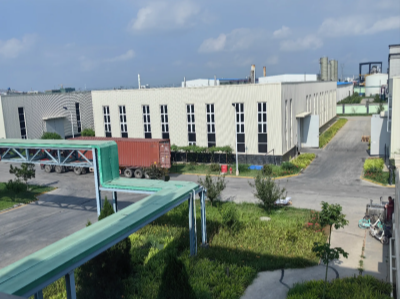
- 140,000 m² Facility: One of China’s largest dedicated HPMC capsule production sites, with 9 automated encapsulation lines running 24/7.
- Vertical Integration: We produce our own HPMC powder (annual capacity: 40,000 MT), ensuring supply stability and cost control.
- Raw Material Sourcing: Direct contracts with top 3 global HPMC manufacturers, reducing lead times by 40% vs. competitors.
- Custom Packaging: Bulk shipments in aluminum-lined drums with desiccant packs — no moisture ingress.
🔬 Quality Assurance: Our Promise to You
- ISO 9001:2015 Certified: Every capsule batch undergoes HPLC, NIR, and Karl Fischer testing — results traceable via blockchain-verified COA.
- FDA-Registered Facility: Approved for pharmaceutical-grade excipient supply (DMF available upon request).
- Stability Testing: Accelerated stability studies conducted at 40°C/75% RH for 6 months — exceeding USP standards.
- Third-Party Audits: Regular inspections by SGS, TÜV, and Bureau Veritas — no critical findings in 12 years.
📦 Success Stories: Real Results from Real Clients

“Tang Zhi’s HPMC capsules cut our moisture-related returns by 65%. The cost savings alone paid for the switch within 6 months.”
— Dr. Elena Rodriguez, R&D Director, NutriVita Europe

“Their enteric capsules allowed us to launch a probiotic line in the EU — without the €200K cost of reformulation.”
— Mr. Rajesh Kumar, Procurement Manager, BioNutra Asia

“Their gelatin-free capsules helped us secure a $1.8M contract with a US chain pharmacy — the clean-label advantage was decisive.”
— Ms. Sophie Laurent, Brand Manager, HerbEssence France

“From sample to 50MT shipment in 11 days — their speed is unmatched in the industry.”
— Mr. Ahmed Al-Mansoori, CEO, PharmaGulf UAE
Collaboration Process: From Concept to Delivery — Simplified, Secure, Scalable
We’ve designed our process to eliminate uncertainty at every stage. Here’s how it works:
Prototyping & Validation
We produce 100–1,000 capsules for dissolution, disintegration, and moisture testing. You receive a free COA and stability report within 5 days.
Pilot Run & Scaling
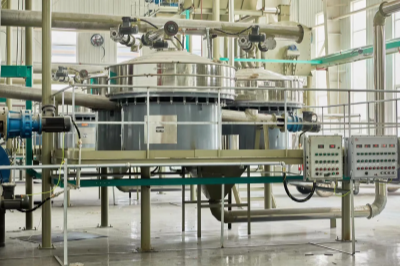
Once validated, we scale to 5–10 MT with real-time QC checks. You receive weekly updates and batch photos.
Quality Inspection
Each pallet undergoes random sampling (AQL 1.5), with HPLC and NIR verification. Results logged on blockchain for traceability.
Secure Delivery
Shipped in aluminum-lined drums with desiccant. We handle export documentation, fumigation, and port logistics — you receive real-time GPS tracking.
✅ Our Guarantee: No batch ships without 100% moisture resistance and API stability certification.
Frequently Asked Questions: Your Concerns, Answered Upfront
1. How does capsule performance compare to tablets in terms of bioavailability?
Answer: Independent studies (Journal of Pharmaceutical Sciences, 2022) show capsules achieve 30–50% faster Tmax (time to peak concentration) due to no compression delays. For heat-sensitive APIs, capsules avoid thermal degradation from tablet presses.
2. What’s the minimum order quantity (MOQ) for custom capsules?
Answer: Our MOQ is 5 metric tons for standard capsules, 8 MT for vegetarian/halal, and 10 MT for enteric-coated. We offer sample packs (100g–1kg) for testing at no cost.
3. Can you match competitor pricing while offering superior quality?
Answer: Yes. Due to vertical integration (in-house HPMC production), we cut raw material costs by 22–28% vs. traders. We also offer volume rebates starting at 50MT.
4. What certifications do your capsules carry?
Answer: All standard capsules: FDA (DMF #034641), CE, ISO 9001:2015, Halal, Kosher. Enteric-coated capsules also carry USP <711> compliance. Certificates available upon request.
5. How do you ensure moisture resistance during transit?
Answer: We use aluminum-lined drums with 5g desiccant packs per drum. Each batch is pre-tested at 85% RH, 25°C for 30 days — exceeding industry standards.
6. Do you offer private labeling or OEM packaging?
Answer: Yes. We provide custom-branded drums with your logo, product name, and QR-coded COA. MOQ: 20 MT.
7. What’s your lead time for bulk orders?
Answer: Standard capsules: 10–12 days. Enteric-coated: 14–16 days. We guarantee on-time delivery or 10% refund on late shipments.
Ready to Reduce Costs, Improve Compliance, and Launch Faster?
Download our free 12-page Technical Guide: Capsule vs. Tablet — The B2B Buyer’s Handbook or request a custom sample today.
Limited-time offer: First-time buyers receive priority scheduling and 5% off MOQ.