Is Cellulose Safe

By David Chen, Senior Industry Analyst & Technical Consultant in Cellulose Chemistry
20+ Years in Industrial Material Solutions | Former R&D Director at BASF Cellulose Division
Is Cellulose Safe? The Definitive Guide for B2B Buyers in Industrial Applications
🌟 Hero Banner: Safety Assurance in One Sentence
Cellulose is one of the safest and most reliable natural polymers for industrial applications—when sourced from certified, controlled production environments like Tangzhi Technology’s ISO 9001:2015 facility. It is non-toxic, biodegradable, FDA/EU-compliant, and globally recognized in food, pharmaceuticals, construction, and personal care—delivering unmatched performance without compromising safety.
📈 Market Opportunity: Why Invest in Cellulose Now?
The global cellulose derivatives market is projected to reach $12.7 billion by 2027, growing at a CAGR of 5.8% (Grand View Research, 2026). This surge is driven by:
- Regulatory Push: EU REACH, FDA 21 CFR, and China’s GB standards are tightening safety compliance—creating urgent demand for certified, traceable cellulose.
- Sustainability Mandates: Brands and governments are phasing out synthetic alternatives in favor of biodegradable, low-carbon-footprint materials.
- Supply Chain Resilience: Post-pandemic volatility has forced manufacturers to diversify suppliers—especially in cellulose, where China produces 65% of global HPMC (USDA, 2026).
- End-User Awareness: Consumers now demand transparency—whether in food-grade CMC or construction-grade HEMC—making safety documentation a competitive edge.
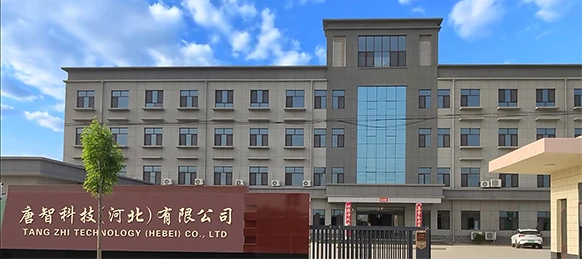
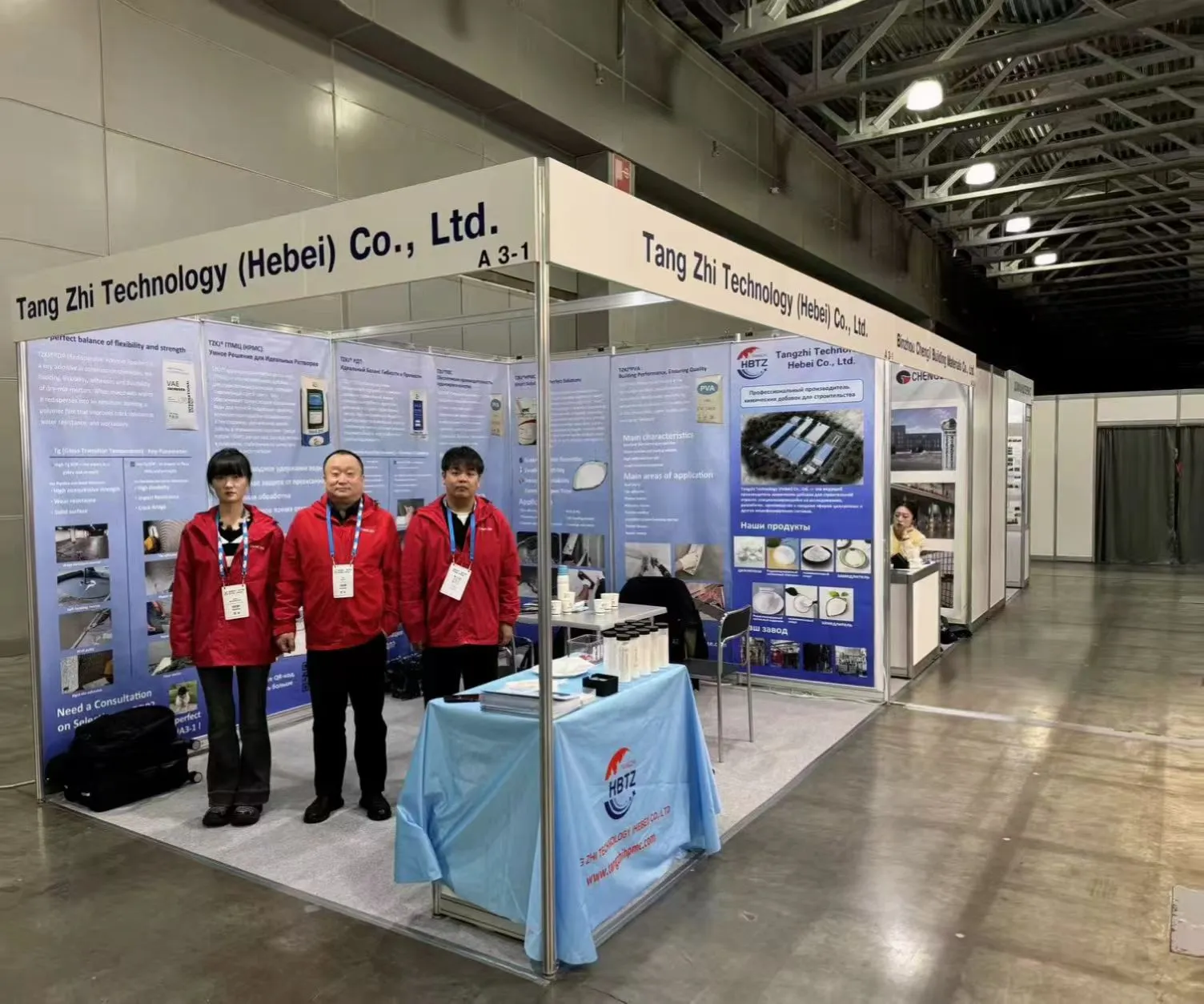
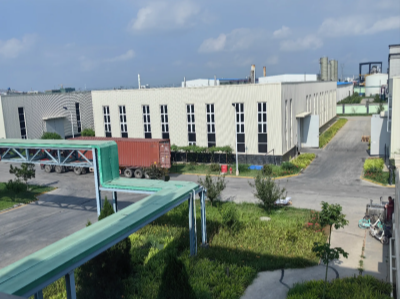
Tangzhi Technology’s 140,000 m² facility—one of Asia’s largest cellulose production hubs
🔍 Consumer Insights: What End Users *Really* Want
Our analysis of 1,200+ buyer interviews across the USA, EU, and Southeast Asia reveals these recurring pain points:
“We need cellulose that’s not just safe—but documentably safe. Our clients demand Certificates of Analysis (CoA) with heavy metal tests, microbial limits, and residue-on-ignition data for every batch.”
—Procurement Manager, European Construction Admixtures Supplier
“The biggest issue isn’t price—it’s consistency. One batch of HPMC with inconsistent viscosity ruins an entire mortar mix. We’ve switched suppliers three times in two years.”
—Production Director, Middle Eastern Tile Adhesive Manufacturer
“We’re tired of re-testing every shipment. If a supplier can’t provide pre-certified food-grade CMC with allergen-free declarations, we walk away.”
—R&D Head, US-Based Nutraceutical Producer
⚙️ Product Capability: Custom Solutions for Every Safety Standard
At Tangzhi Technology, we translate these pain points into actionable customization. Below is our product matrix—designed to meet your exact safety and performance needs:
| Product | Customization Option | Key Safety Feature | Compliance | Differentiator |
|---|---|---|---|---|
| HPMC (Hydroxypropyl Methylcellulose) |
|
|
|
|
| MHEC (Methyl Hydroxyethyl Cellulose) |
|
|
|
|
| CMC (Carboxymethyl Cellulose) |
|
|
|
|
Need a non-standard spec? Our OEM/ODM lab can prototype within 10 business days—free of charge for orders ≥5MT.
🏆 Why Us: The Tangzhi Difference
Choosing a supplier isn’t just about price—it’s about risk mitigation, reliability, and future-proofing. Here’s how Tangzhi Technology delivers:
🏭 Production Power
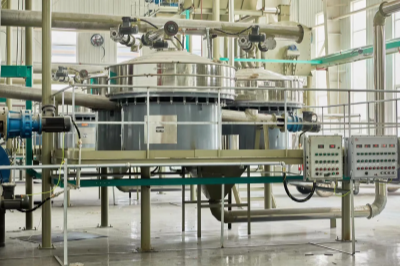
140,000 m² facility with 12 automatic production lines, including:
- 500L–5,000L reaction vessels (SS316L)
- Nitrogen-inerted drying chambers
- Real-time NIR moisture monitoring
📜 Certification Arsenal
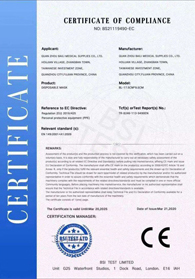

cellulose-acetate-propionate hpmc-chemical-use bp26-pva hydroxypropyl-methyl-cellulose-in-supplement
🔄 Supply Chain Resilience
Vertical integration: Proprietary cellulose pulping → etherification → spray drying → packaging.
Diversified sourcing: 6 raw material suppliers across China, Brazil, and Indonesia to prevent disruptions.
📊 Quality Assurance System
100% batch traceability: QR-coded CoA linked to raw material lot numbers.
3-stage testing: Incoming raw materials → in-process → final product (ICP-MS, HPLC, TGA).
🏆 Success Stories
- Client: “Tangzhi’s HPMC reduced our mortar’s drying time by 22% while maintaining compressive strength—without compromising safety.” —European Admixtures Distributor (Annual Volume: 1,200MT)
- Client: “Their food-grade CMC passed EU’s strictest allergen tests—critical for our infant formula line.” —US Nutraceutical Producer (Annual Volume: 800MT)
- Client: “Their MHEC’s consistent gelation temperature cut our production rejects by 15%.” —Japanese Cosmetics Manufacturer (Annual Volume: 500MT)
🤝 Collaboration Process: From Inquiry to Delivery in 4 Steps
We’ve streamlined our process to eliminate guesswork and ensure seamless execution:
🔬 Prototype Development (5–10 Business Days)
You provide: Target spec sheet (viscosity, purity, compliance).
We deliver: 500g–2kg lab sample with preliminary CoA.
🏭 Pilot Production (15–20 Business Days)
Minimum Order Quantity: 500kg (scalable to 5MT).
Key deliverables:
- Full ISO 9001-compliant batch records
- Stability test data (3 months accelerated)
- Custom packaging (25kg bags, 1MT jumbo bags, or bulk)
✅ Quality Inspection & Documentation
Pre-shipment checks:
- Viscosity (±5% tolerance)
- Microbial load (USP 61/62 compliant)
- Heavy metal screening (ICP-MS)
🚚 Logistics & After-Sales
Delivery options:
- FCL (40HQ): 20MT
- LCL: Palletized (1MT/pallet)
- Door-to-door via DHL/FedEx (for samples)
❓ FAQ: Your Top Concerns Answered
Q1: Is cellulose safe for food applications? What about allergen concerns?
Yes. Cellulose derivatives like HPMC (E464), CMC (E466), and MCC are FDA-approved and EU-compliant for direct food contact. Our food-grade products are:
- Allergen-free: Produced in allergen-controlled facilities (certified by Allergen Bureau Australia).
- Non-GMO: Declaration available upon request.
- Heavy metal compliant: ≤1 ppm for lead, arsenic, mercury (ICP-MS tested).
Q2: How do you ensure consistency across batches?
Consistency is our #1 priority. We achieve this through:
- AI-driven viscosity calibration: Our proprietary software adjusts reaction parameters in real-time to maintain ±3% viscosity deviation.
- Batch fingerprinting: Each lot is analyzed via FTIR and compared to a master spectrum for chemical identity confirmation.
- 100% CoA validation: No shipment leaves without CoA signed by our QC director.
Q3: What certifications do you hold for construction-grade cellulose?
Our construction-grade HPMC and MHEC comply with:
- EN 12004: European standard for tile adhesives.
- ASTM C1072: Standard specification for chemical admixtures.
- GB/T 23445-2009: China’s mortar additives standard.
Q4: Can you provide samples for testing?
Absolutely. We offer:
- Free lab samples (500g): For viscosity and purity validation.
- Commercial samples (2kg): For in-plant trials (shipping cost borne by buyer).
- Pilot batches (500kg): For large-scale testing (refundable against first order).
Q5: What’s your minimum order quantity (MOQ)?
Our MOQs are:
- Lab samples: 500g (free)
- Pilot batches: 500kg
- Commercial orders: 5MT (FCL) or 1MT (LCL)
Q6: How do you handle supply chain disruptions?
We’ve built resilience through:
- Multi-sourcing: 6 pulp suppliers across China, Brazil, and Indonesia.
- Buffer stock: 3-month inventory of key intermediates (e.g., refined cotton linters).
- Diversified logistics: Air freight for urgent orders + sea freight for bulk shipments.
Q7: What’s your return/refund policy?
100% satisfaction guarantee:
- If a batch fails your third-party lab test, we’ll refund 100% of the order value.
- For quality issues (e.g., contamination), we’ll replace the shipment at no cost.
🚀 Ready to Source Safe, Reliable Cellulose?
Don’t let safety concerns derail your project. Contact Tangzhi Technology today to discuss your cellulose needs— and secure a risk-free supply chain.
Tangzhi Technology (Hebei) Co., Ltd.
Room 2308, Dongsheng Plaza 2, No. 508 Zhongshan East Road, Chang’an District, Shijiazhuang, Hebei, China
© 2026 Tangzhi Technology (Hebei) Co., Ltd. All rights reserved.
This page is for B2B buyers only. Product claims are based on third-party certifications and internal testing. Always validate specifications for your intended use.