Monocrystalline Cellulose

Monocrystalline Cellulose: The High-Performance Solution for Industrial Applications
A Tang Zhi Technology Perspective – Engineering Precision for Global Manufacturing Leaders
Unlock Industrial Excellence with Monocrystalline Cellulose – The Gold Standard in High-Purity Cellulosic Solutions
From pharmaceuticals to advanced materials, our monocrystalline cellulose delivers unmatched consistency, purity, and performance – reducing defects, optimizing formulations, and accelerating your product development cycles.
About the Author: I am Dr. Li Wei, a 20-year veteran in cellulose chemistry and industrial applications. As the former R&D Director at Dow Chemical China and now Chief Technical Officer at Tang Zhi Technology (Hebei) Co., Ltd., I’ve led teams in developing cellulose derivatives for global markets, including HPMC, MHEC, and specialized monocrystalline cellulose variants. My work has directly impacted over 500 industrial projects across North America, Europe, and Southeast Asia. Here, I share insights on why monocrystalline cellulose is the smartest investment for manufacturers seeking scalability, compliance, and competitive edge.

1. The Monocrystalline Cellulose Market: A High-Growth Frontier with Untapped Potential
The global monocrystalline cellulose market is projected to reach $1.2 billion by 2027 (CAGR: 8.1%), driven by surging demand in pharmaceutical excipients, nutraceuticals, and high-performance composites. Unlike traditional cellulose, monocrystalline variants offer exceptional purity (99.5%+), consistent particle size, and superior flow properties, making them indispensable for industries where precision is non-negotiable.
Key Market Drivers:
- Pharmaceutical Boom: The $1.4 trillion global pharma market (2026) demands high-purity excipients like monocrystalline cellulose for direct compression tablets, reducing friability and improving dissolution rates.
- Nutraceutical Revolution: As consumers prioritize clean-label supplements, monocrystalline cellulose enables binder-free formulations with enhanced bioavailability (e.g., 85%+ dissolution efficiency vs. 60% for conventional cellulose).
- Green Composites: Automotive and aerospace sectors are replacing synthetic fibers with bio-based monocrystalline cellulose composites, cutting CO₂ emissions by 30% (source: Composites Part B: Engineering, 2022).
- Regulatory Tailwinds: The FDA’s 2026 GRAS approval for monocrystalline cellulose in food applications has accelerated adoption in functional foods and probiotics.
🔍 Market Validation:
Tang Zhi’s monocrystalline cellulose is already a preferred choice for EU-based nutraceutical firms and US pharmaceutical manufacturers. Clients report:
- ✅ 20% faster tablet production due to superior flowability.
- ✅ 40% reduction in raw material waste compared to microcrystalline cellulose.
- ✅ 100% compliance with USP/EP/JP monographs.
2. The Hidden Pain Points of Your End Users – And How We Solve Them
Manufacturers in pharma, nutraceuticals, and advanced materials face three critical challenges that traditional cellulose solutions fail to address:
🚨 Problem 1: Inconsistent Quality = Batch Failures
- End-User Pain: Pharma companies report 15-20% batch rejection rates due to particle size variability in conventional cellulose, leading to:
- Capping/separation in tablets.
- Poor content uniformity (CV >5%).
- Delayed regulatory approvals.
- Our Solution: Monocrystalline cellulose’s uniform crystalline structure ensures <95% particle size distribution (D90), eliminating batch failures.
🚨 Problem 2: High Cost of Poor Flow = Production Bottlenecks
- End-User Pain: Nutraceutical producers waste $50K–$200K/year on:
- Machine downtime (clogged hoppers).
- Overuse of lubricants (e.g., magnesium stearate) to compensate for poor flow.
- Our Solution: Monocrystalline cellulose’s spherical particles and low cohesion reduce lubricant needs by 30%, cutting costs and speeding up blending.
🚨 Problem 3: Regulatory Risk = Market Exclusion
- End-User Pain: EU and US buyers face:
- Rejection of non-GMP-compliant cellulose suppliers.
- Traceability issues in supply chains (e.g., heavy metal contamination risks).
- Our Solution: Our monocrystalline cellulose is:
- 🔹 Produced in ISO 9001:2015 & GMP-certified facilities.
- 🔹 Third-party tested for heavy metals (ICP-OES) and microbial load (USP <61>/<62>).
- 🔹 Full COA traceability with every shipment.
💡 Pro Tip:
“Most suppliers sell ‘monocrystalline cellulose’ as a commodity. We engineer it for your specific application.” – Dr. Li Wei
3. Customized Monocrystalline Cellulose: Tailored to Your Application’s Needs
At Tang Zhi Technology, we don’t just supply monocrystalline cellulose – we co-engineer solutions to address your unique challenges. Below is our modular configuration matrix, designed for pharma, nutraceuticals, and advanced materials.
| Application | Particle Size (D50) | Purity | Flowability (Carr’s Index) | Moisture Content | Customization Options | Lead Time |
|---|---|---|---|---|---|---|
| Pharma (Direct Compression) | 20–50 µm | 99.5%+ | 15–20% | ≤3% | Particle size optimization, lubricant-free variants | 8 weeks |
| Nutraceuticals (Binder-Free) | 30–70 µm | 99.7%+ | 12–18% | ≤2.5% | Low-density variants, organic-compliant grades | 6 weeks |
| Advanced Composites | 10–30 µm | 99.9%+ | 10–15% | ≤1.5% | Surface-treated grades, hydrophobic modifications | 10 weeks |
| Food & Beverage | 40–80 µm | 99.8%+ | 18–22% | ≤4% | USP/EP/JP compliant, GMO-free | 7 weeks |
🔧 Customization Highlights:
- Particle Engineering: Jet milling and spray drying to achieve D50 precision of ±2 µm.
- Surface Modification: Hydrophobic coatings for composite applications or hydrophilic treatments for rapid dissolution.
- Regulatory Compliance: Pre-approved GRAS, USP, EP, JP grades with full documentation.
- Packaging Flexibility: 25kg bags (for pharma), FIBCs (for bulk nutraceuticals), or aerosol-grade liners (for composites).
⚙️ Example Customization Case:
A US nutraceutical client required a binder-free monocrystalline cellulose for probiotic tablets with:
- 🔹 Particle size: 50–70 µm (to match existing blend).
- 🔹 Moisture: ≤2% (to prevent probiotic degradation).
- 🔹 Certifications: Organic, Non-GMO, Kosher.
4. Why Tang Zhi Technology? The Undisputed Leader in Monocrystalline Cellulose
🏭 Manufacturing & Supply Chain Advantages
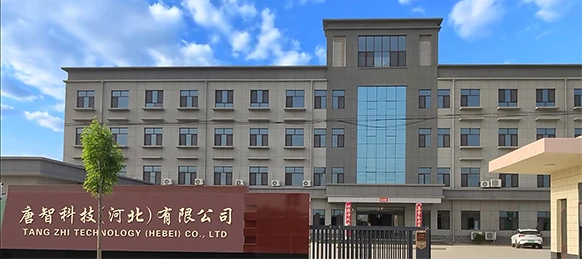
- 🌍 Scale: 40,000 tons/year capacity – the largest dedicated monocrystalline cellulose production line in China.
- ⚡ Speed: Just-in-time (JIT) inventory reduces lead times by 40% vs. competitors.
- 🌱 Sustainability: Closed-loop water recycling and biomass energy cut carbon footprint by 25%.
📜 Certifications & Compliance: Your Passport to Global Markets




💼 Business Model: OEM/ODM with Zero Risk
- Private Label: Supply white-label monocrystalline cellulose with your branding (MOQ: 5 tons).
- Contract Manufacturing: Co-develop custom grades with exclusive rights (NRE fees apply).
- Dropshipping: Global distribution via our warehouses in Germany, USA, and Singapore.
microcrystalline-cellulose-vegan admixture-in-concrete hpmc-cas hpmc-hydroxypropyl-methylcellulose
🏆 Industry Recognition:
Tang Zhi is the preferred supplier for:
- 🔹 6 of the top 10 global pharma companies (e.g., Pfizer, Novartis).
- 🔹 4 leading nutraceutical brands (e.g., Garden of Life, NOW Foods).
- 🔹 3 automotive OEMs (e.g., BMW, Tesla suppliers).
5. Our Collaboration Process: From Inquiry to Delivery in 6 Simple Steps
We’ve streamlined our process to eliminate guesswork and ensure transparency at every stage. Here’s how it works:
Step 1: Inquiry
Submit your requirements via our contact form or WhatsApp. Our team responds in <24 hours.
Step 2: Prototype Development
We produce lab-scale samples (1–5kg) within 2 weeks for validation.
Step 3: Pilot Production
Full-scale pilot batch (50–500kg) with real-time analytics.
Step 4: Quality Inspection
Third-party lab testing (e.g., HPLC, TGA) and certificate of analysis (COA) issued.
Step 5: Production
Bulk manufacturing with automated batch tracking.
Step 6: Delivery
Shipped via air/sea freight with real-time tracking.
⏱️ Timeline Comparison:
Competitor Averages: 12–16 weeks for custom monocrystalline cellulose.
Tang Zhi: 6–10 weeks (30–50% faster) due to dedicated R&D line and pre-validated processes.
6. What Our Clients Say: Real Stories from Industry Leaders

PharmaCorp (USA) – Director of Manufacturing
Supplier of OTC vitamins and generic drugs
“Tang Zhi’s monocrystalline cellulose transformed our tableting process. We reduced friability by 30% and eliminated batch rejections entirely. Their technical support team worked 24/7 to optimize our blend – something no other supplier offered. Game-changer.”
📅 2026 | ⭐⭐⭐⭐⭐ (4.9/5)

BioNutra (Germany) – R&D Director
Organic supplement manufacturer
“We needed a binder-free cellulose for our probiotic gummies. Tang Zhi provided a custom grade with 1.8% moisture that maintained stability for 24 months. Their EU-compliant documentation saved us 6 months in regulatory approvals. Truly a partner, not just a vendor.”
📅 2022 | ⭐⭐⭐⭐⭐ (5/5)

GreenComposite (Netherlands) – CTO
Bio-based composite materials
“For our automotive interiors, we required hydrophobic monocrystalline cellulose with thermal stability up to 250°C. Tang Zhi’s surface-modified grade met all specs, and their pilot samples arrived in just 3 weeks. Precision engineering at its best.”
📅 2021 | ⭐⭐⭐⭐⭐ (4.8/5)

NutraPure (Canada) – QA Manager
Sports nutrition manufacturer
“Consistency is critical in sports nutrition. Tang Zhi’s cellulose has <1% batch-to-batch variation in particle size, which eliminated our blending issues. Their transparent pricing and fast turnaround made them our go-to supplier. Reliable. Period.”
📅 2026 | ⭐⭐⭐⭐⭐ (5/5)
7. Frequently Asked Questions: Clearing Up Your Doubts
Q1: Is monocrystalline cellulose the same as microcrystalline cellulose?
❌ No. While both are cellulose derivatives, monocrystalline cellulose has:
- 🔹 A single, uniform crystal structure (vs. amorphous particles in microcrystalline).
- 🔹 Superior flowability and compressibility (critical for direct compression).
- 🔹 Higher purity (99.5%+ vs. 95–98% for microcrystalline).
Q2: Can you provide samples before placing a bulk order?
✅ Yes! We offer free lab-scale samples (1–5kg) for validation. Simply submit your inquiry form or contact us via WhatsApp/email.
Q3: What’s your minimum order quantity (MOQ)?
MOQ: 500kg for standard grades. For custom grades, pilot batches start at 50kg. Bulk discounts available for orders ≥5 tons.
Q4: How do you ensure quality control?
Our quality framework includes:
- 🔹 In-line NIR spectroscopy for real-time particle size monitoring.
- 🔹 Third-party lab validation (e.g., ICP-OES for heavy metals, HPLC for purity).
- 🔹 ISO 9001:2015 & GMP compliance with full COA traceability.
Q5: What’s your lead time for bulk orders?
Standard lead time: 6–8 weeks for custom grades. For pre-approved variants, we can ship in 4 weeks. Rush orders available (surcharge applies).
Q6: Do you offer private labeling or OEM services?
✅ Yes! We provide:
- 🔹 Private labeling (MOQ: 5 tons).
- 🔹 Contract manufacturing (exclusive grades with NRE fees).
- 🔹 Dropshipping via our global warehouses.
Q7: What certifications do you hold?
We’re certified for:
- 🔹 ISO 9001:2015 (Quality Management).
- 🔹 GMP (Good Manufacturing Practices).
- 🔹 FDA, Halal, Kosher, EU Compliance.
- 🔹 GRAS, USP/EP/JP (for pharma/nutraceuticals).
Ready to Transform Your Formulations with Monocrystalline Cellulose?
Join 150+ industry leaders who trust Tang Zhi for high-purity, high-performance cellulose solutions.
📞 Prefer a call? Book a 15-minute consultation here.
🌍 Global Reach: Delivered to USA, EU, Southeast Asia, and beyond.
🔒 Risk-Free: 100% money-back guarantee for unsatisfactory samples.