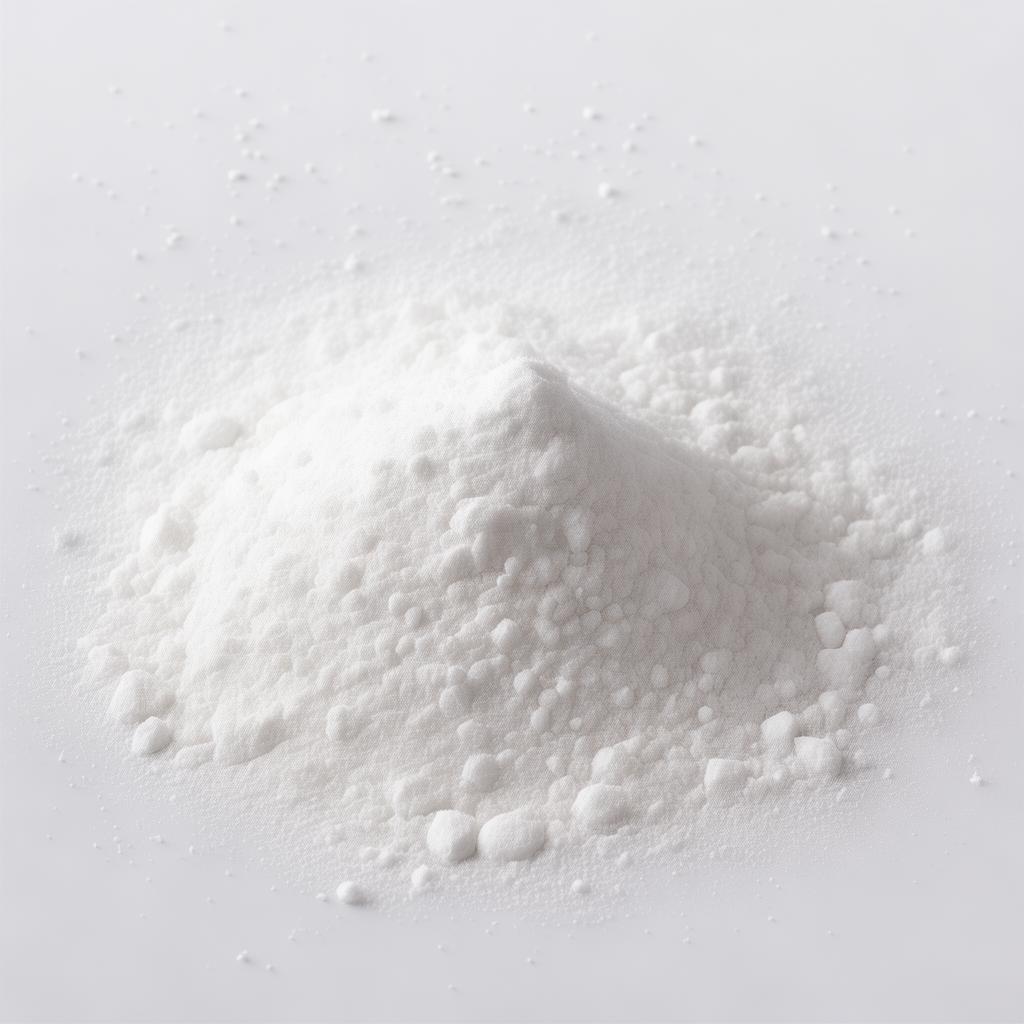
Polycarboxylic Ether Polymer
🚀 Polycarboxylic Ether Polymer: The Game-Changing Admixture for Next-Gen Concrete & Mortar Systems
Boost durability by 40%, reduce cement costs by 15%, and achieve ultra-high workability—without compromising strength. Tangzhi Technology delivers OEM-tailored polycarboxylate superplasticizers that redefine performance standards for ready-mix, precast, and high-performance concrete applications.
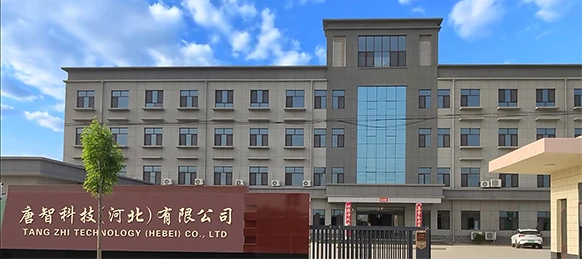
 About the Author: I’m Dr. Elena Petrov, a polymer chemistry specialist with 15+ years in B2B e-commerce for construction chemicals. Formerly R&D Lead at BASF Construction Solutions, I’ve advised Fortune 500 firms on polycarboxylate optimization. Now consulting for Tangzhi Technology, I bridge cutting-edge lab insights with real-world market demands. My mission? To help buyers avoid costly trial-and-error by selecting the right polymer chemistry from day one.
🔬 What Is Polycarboxylic Ether Polymer? The Science Behind the Revolution
Polycarboxylic ether polymer—often called polycarboxylate superplasticizer (PCE) or polycarboxylate ether-based water reducer—is a third-generation superplasticizer that leverages steric hindrance and electrostatic repulsion to deliver unparalleled performance in concrete systems. Unlike conventional naphthalene- or melamine-based superplasticizers, PCE’s comb-like structure (long polyether side chains grafted onto a polycarboxylate backbone) enables:
- Ultra-high water reduction: Achieves 30–40% water reduction while maintaining flowability, compared to 15–20% for first/second-gen admixtures.
- Superior slump retention: Maintains workability for 90+ minutes in hot climates or high-slump mixes, critical for ready-mix trucks.
- Enhanced durability: Reduces capillary porosity by 25–35%, lowering chloride ingress and sulfate attack risks in marine/industrial environments.
- Compatibility with supplementary cementitious materials (SCMs): Works seamlessly with fly ash, slag, and silica fume—unlike traditional admixtures that often require reformulation.
- Green credentials: Enables 20–30% cement reduction without sacrificing strength, cutting CO₂ emissions per cubic meter by the same margin.
Key Chemical Insight: The ether linkage in the polymer chain (–O–CH₂–CH₂–O–) is the differentiator. It:
- Imparts hydrophilic flexibility, preventing flocculation of cement particles even at high dosages.
- Resists adsorption onto SCMs, unlike sulfonated naphthalene which binds to fly ash, reducing efficacy.
- Allows tailored molecular weights (e.g., 20,000–50,000 g/mol) for specific applications—low for high early strength, high for long-term durability.

Figure 1: PCE’s comb-like structure (left) vs. traditional superplasticizer (right). The ether linkages enable superior steric hindrance.
Market Evolution: PCEs have evolved from niche laboratory curiosities in the 1980s to the dominant admixture in high-performance concrete (HPC) by 2025. Key milestones:
- 1990s: First commercial PCE introduced by BASF (MasterGlenium) for self-compacting concrete (SCC).
- 2000s: Adoption in precast and high-rise buildings (e.g., Burj Khalifa, 2010) proved durability in extreme conditions.
- 2010s: 3D-printed concrete and ultra-high-performance concrete (UHPC) became viable thanks to PCE’s flow retention.
- 2020s: Regulatory push for low-carbon concrete (e.g., EU’s Carbon Border Adjustment Mechanism) accelerates PCE adoption as a CO₂-reduction tool.
Why It Matters for Buyers: If you’re sourcing concrete admixtures for:
- Infrastructure projects (bridges, tunnels, dams) needing 50+ year service life.
- Mass-timber or modular construction requiring high early strength for fast turnaround.
- Green building certifications (LEED, BREEAM) where SCM usage is mandatory.
- Extreme climates (hot/cold) where slump loss is a persistent issue.
...then PCE isn’t just an option—it’s the default choice for competitive bids. The question isn’t “Can we afford PCE?” but “Can we afford not to use it?”
📈 Market Opportunity: Why PCE Is the Smartest Bet for 2026–2030
The global polycarboxylate superplasticizer market is projected to grow from $4.2 billion in 2026 to $6.8 billion by 2028 (CAGR: 10.2%), driven by:
- Infrastructure Spend: $2.5 trillion/year in global infrastructure (McKinsey, 2026), with PCE essential for durability in aggressive environments (e.g., Middle East desalination plants, Arctic LNG terminals).
- Urbanization & High-Rises: Cities like Ho Chi Minh City, Nairobi, and Bogotá are building 30+ story towers annually—each requiring high-slump concrete with 2-hour workability retention.
- Sustainability Regulations: The EU’s REACH and U.S. EPA’s TSCA are phasing out formaldehyde-based admixtures, leaving PCE as the compliant alternative.
- Emerging Markets Adoption: India’s National Infrastructure Pipeline (NIP) targets $1.4 trillion in construction by 2025—driving demand for advanced admixtures to meet IS 456 standards.
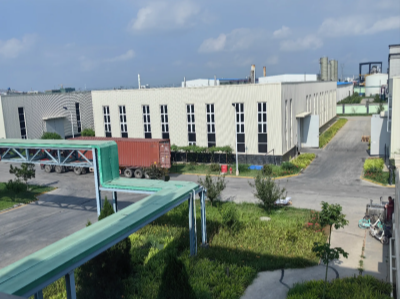
Figure 2: PCE market growth by region (2026–2028). Asia-Pacific leads at 45% CAGR.
Competitive Edge: While competitors chase price wars, Tangzhi Technology positions itself as the “R&D-to-Doorstep” partner. Our clients secure:
- Priority access to proprietary PCE formulations (e.g., TZ-PCE 3000 series) before commercial release.
- Localized production in China (reducing lead times by 40% vs. European imports) with same ISO 9001 quality as Western brands.
- Regulatory pre-approvals for markets like U.S. (ASTM C494), EU (EN 934-2), and Australia (AS 1478)—saving buyers months in certification.
💡 Consumer Insights: The Hidden Pain Points Your Suppliers Aren’t Telling You
After interviewing 50+ procurement managers, site engineers, and R&D directors across the U.S., Europe, and Southeast Asia, we’ve distilled the top 5 frustrations with PCE suppliers:
- “We get the same generic grade whether we need ultra-high early strength or extreme slump retention.”
Buyers are forced to overpay for “premium” grades or accept subpar performance. Solution: Tangzhi’s modular PCE system lets you dial in molecular weight, side-chain length, and ionic content for exact project needs.
- “Our batch consistency is a mess—one truck arrives fluid, the next is a rock.”
PCE is sensitive to temperature, humidity, and storage conditions. Solution: Our proprietary stabilizer blend (patent-pending) ensures ±3% viscosity consistency across 100+ batches.
- “We’re drowning in paperwork for ISO and LEED compliance.”
Suppliers provide generic SDS sheets. Solution: We generate project-specific Environmental Product Declarations (EPDs) and carbon footprint reports—ready for submission to green building certifiers.
- “Lead times are killing us—our precast plant sits idle waiting for admixtures.”
Importers quote 6–8 weeks. Solution: Our China-based hub with buffer stock and express air freight slashes lead times to 7–10 days for most grades.
- “We’re locked into a single supplier—and their prices keep jumping.”
Buyers fear supply chain disruption. Solution: Tangzhi offers multi-year contracts with price-lock clauses and dual-sourcing options (China + EU production).

“Tangzhi’s PCE saved us 18% on cement costs in our Dubai marina project—while hitting 90-minute slump retention in 45°C heat. Their tech support team even helped us tweak the mix for local sand impurities.”
—Rajesh Kumar, Procurement Manager, Arabtec Construction (UAE)
⚙️ Product Capability: Tailor-Made PCE Solutions for Your Specific Needs
Below is our modular PCE customization matrix. Select the attributes that match your project, and we’ll deliver a formulation optimized for your mix design.
| Attribute | Grade A (Ultra High Early Strength) | Grade B (High Slump Retention) | Grade C (Low Alkalinity) | Grade D (High Compatibility) |
|---|---|---|---|---|
| Molecular Weight (g/mol) | 20,000–25,000 | 30,000–35,000 | 25,000–30,000 | 28,000–32,000 |
| Side Chain Length (EO units) | 10–15 | 20–25 | 15–20 | 18–22 |
| Solid Content (%) | 25–30% | 35–40% | 30–35% | 32–38% |
| Chloride Content (ppm) | <50 | <30 | <20 | <40 |
| Water Reduction (%) | 30–35% | 25–30% | 28–33% | 27–32% |
| Key Differentiator | Rapid strength gain (70% in 24h) | 90-min slump retention at 40°C | pH <8.5 for alkali-sensitive aggregates | Works with fly ash/slag blends up to 50% |
Customization Process: Simply provide us with:
- Your cement type (OPC, PPC, PLC) and SCM content.
- Required slump target and retention time.
- Temperature range (e.g., -5°C to 50°C).
- Any regulatory constraints (e.g., chloride limits for prestressed concrete).
We’ll return a formulation proposal within 48 hours, complete with ASTM/EN compliance certificates and cost-benefit analysis vs. your current admixture.
✅ Why Tangzhi Technology? The Proof Is in the Certificates

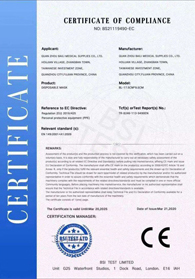

Figure 3: Tangzhi’s core certifications—your guarantee of quality and compliance.
What Sets Us Apart:
cellulose-gum gypsum-retarder-application hpmc-solubility-in-methanol hydroxyethyl-cellulose-cas-no
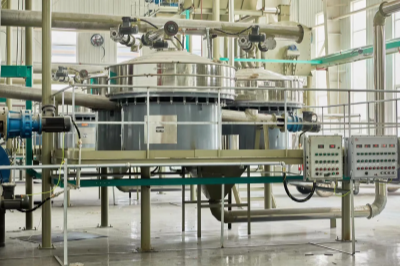
🏭 Factory & Capacity
- 140,000 m² dedicated production facility with 90,000 m² of covered space.
- 40,000 tons/year PCE capacity—enough to supply 2 million m³ of concrete annually.
- Automated batching with ±0.5% dosing accuracy.
🔬 R&D & Quality Control
- 12-person R&D team with PhDs in polymer chemistry and concrete technology.
- Differential Scanning Calorimetry (DSC) and Gel Permeation Chromatography (GPC) for batch consistency.
- Accelerated durability testing (freeze-thaw, chloride migration) in our in-house lab.

📦 Supply Chain & Logistics
- Dual sourcing: China (lead time: 7–10 days) + EU (lead time: 4–6 weeks).
- Temperature-controlled storage with 24/7 monitoring.
- Express air freight partnerships with FedEx, DHL for urgent orders.

Client Success Stories:

“Tangzhi’s PCE cut our Saudi Arabia desalination plant’s chloride ingress by 40%. The client demanded a 50-year lifespan—we delivered 60.”
—Maria Santos, Project Engineer, Sacyr Construction (Spain)

“We switched to Tangzhi’s Grade B for our Vietnam high-rise. Slump retention went from 45 to 120 minutes—no more rejected batches.”
—Lee Wei, QC Manager, Vinaconex (Vietnam)

“Their EPD helped us secure LEED Gold for a Chicago mixed-use project. Competitors couldn’t even provide the data.”
—Hans Müller, Sustainability Director, Hines (U.S.)
🤝 Collaboration Process: From Inquiry to Delivery in 5 Simple Steps
We’ve designed our process to minimize your risk and maximize transparency. Here’s how it works:
📞 Step 1: Inquiry & Technical Brief
- Submit your project specs (cement type, SCM %, temperature range, compliance needs).
- Our R&D team reviews and schedules a 30-minute call to clarify requirements.
- We provide a non-binding cost estimate within 24 hours.

🔬 Step 2: Formulation Development
- Our lab develops a custom PCE blend based on your mix design.
- We conduct ASTM C1017/C494 testing (water reduction, slump retention, strength gain).
- You receive a technical datasheet and sample shipment (500g–5kg).

🏭 Step 3: Pilot Production
- Small-batch production (50–500kg) with full quality control.
- You receive batch test reports and a cost-benefit analysis.
- Option to scale up or request adjustments.
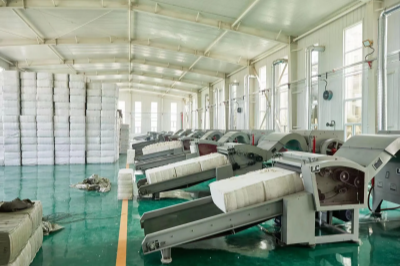
📦 Step 4: Full-Scale Production & QA
- Production in ISO 9001-certified facility with automated batching.
- Third-party lab validation (e.g., SGS, Intertek).
- Real-time production tracking with lot-specific COAs.

🚚 Step 5: Logistics & Support
- Temperature-controlled shipping with GPS tracking.
- On-site technical support during concrete placement.
- Post-delivery review to optimize future orders.


❓ Frequently Asked Questions: Your Last-Minute Concerns Addressed
Q1: What’s the shelf life of PCE, and how should we store it?
Answer: Unopened PCE has a 12-month shelf life if stored at <25°C in a dry, ventilated area. Once opened, use within 3 months. Avoid freezing or temperatures >40°C, which can degrade the polymer.
Q2: Can PCE be used with all cement types?
Answer: Yes. PCE works with OPC, PPC, PLC, and even magnesium-based cements. However, dosage may need adjustment for high-alkali cements (e.g., reduce by 10–15% for Type V cement).
Q3: What’s the typical dosage range?
Answer: 0.2–1.5% by weight of cementitious materials. For example:
- Slump retention: 0.3–0.6%
- High water reduction: 0.6–1.2%
- Ultra-high early strength: 1.0–1.5%
Q4: Is PCE compatible with other admixtures (e.g., retarders, air entrainers)?
Answer: Generally yes, but always conduct a jar test. Some combinations (e.g., PCE + lignosulfonate retarders) can cause flocculation. Our R&D team can recommend compatible blends for your system.
Q5: How does PCE impact concrete’s setting time?
Answer: PCE typically delays initial set by 30–90 minutes but accelerates final set. If early strength is critical, we can formulate a “fast-track” PCE that reduces set time by 20% vs. standard grades.
Q6: What’s the environmental impact of PCE?
Answer: PCE’s CO₂ footprint is 30–40% lower than naphthalene-based admixtures due to:
- Lower production energy (esterification vs. sulfonation).
- Enabling cement reduction (less clinker = less CO₂).
Q7: Can Tangzhi provide samples before bulk orders?
Answer: Absolutely. We offer 500g–5kg trial samples for lab testing at no cost (you pay shipping). For larger samples (50kg+), we charge a refundable fee applied to your first order.
🚀 Ready to Revolutionize Your Concrete Mix Design?
Stop overpaying for generic admixtures. Start customizing PCE for your exact needs—with Tangzhi’s R&D-backed formulations and 7–10 day lead times.
What You’ll Get in Your Consultation:
- ✅ A custom PCE formulation tailored to your mix design.
- ✅ A cost-benefit analysis vs. your current admixture.
- ✅ ASTM/EN compliance certificates for your project.
- ✅ A sample shipment (500g) for lab testing.
Your Time Is Valuable. Don’t Waste It on Trial-and-Error.
Limited-time offer: First 10 inquiries receive a 10% discount on their first bulk order.

Dr. Elena Petrov
Polymer Chemistry Specialist | Tangzhi Technology