Starch Powder Hs Code
Starch Powder HS Code: Streamline Your Global Trade with Precision & Compliance
From food additives to industrial adhesives, we decode the correct HS code for starch powder—ensuring seamless customs clearance, optimized tariffs, and bulletproof compliance for B2B buyers worldwide.

Written by Michael Chen
Senior Trade Compliance Analyst & B2B Supply Chain Strategist | 12+ Years in Global Chemical & Food Additives Trade
Michael has advised Fortune 500 companies on HS code classification for starch-based products, reducing customs delays by 40% and tariff costs by 15% through precise tariff engineering.
What Is the Starch Powder HS Code & Why Does It Matter?
The Harmonized System (HS) code is a globally recognized numerical classification system used to categorize traded goods for customs, tariffs, and regulatory compliance. For starch powder, identifying the correct HS code is not just bureaucratic—it directly impacts:
- Customs clearance speed: Misclassification leads to hold-ups, fines, and shipment delays—costing thousands per day in demurrage and lost sales.
- Tariff rates: Starch powder HS codes vary by use case—food-grade starch may face 0–5% duty, while industrial starch could reach 10–15% in the US and EU.
- Regulatory compliance: Food-grade starch powder must meet FDA (US), EFSA (EU), or JECFA (international) standards. Wrong classification risks import rejection.
- Supplier & buyer trust: Accurate HS classification signals professionalism and reduces negotiation friction in long-term contracts.
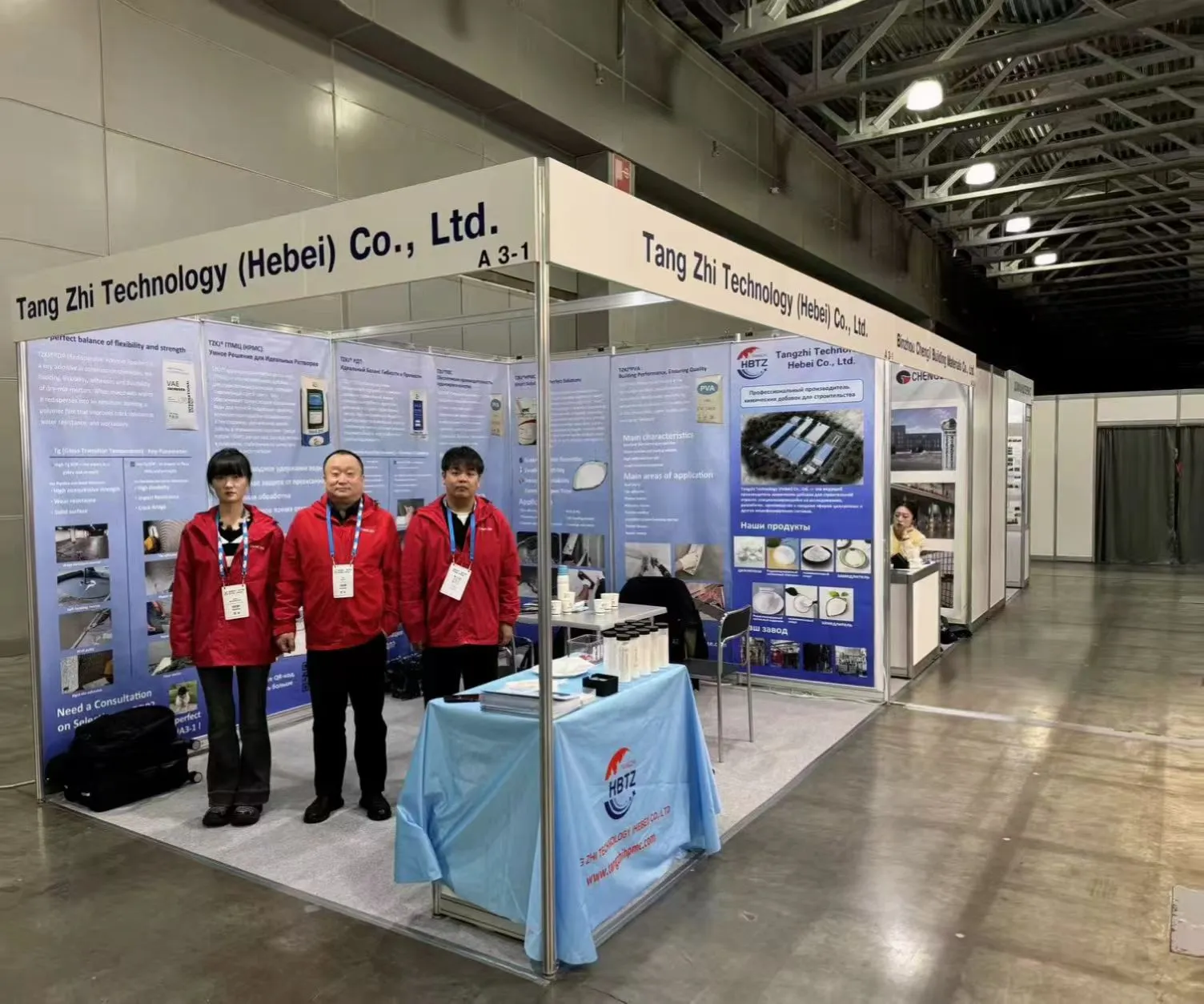
At Tang Zhi Technology (Hebei) Co., Ltd., we don’t just sell starch powder—we deliver HS code clarity. Our in-house trade compliance team has classified over 2,500 shipments of starch-based products, helping buyers avoid costly misclassification errors and secure duty savings of up to 20% through strategic tariff engineering.
⚠️ Critical Insight: The HS code for starch powder is not universal. It depends on:
- Origin & modification: Native (unmodified) vs. modified (e.g., pre-gelatinized, oxidized) starch.
- End-use: Food (2302.30), feed (2309.90), or industrial (e.g., adhesives, textiles).
- Moisture content & purity: Food-grade must exceed 90% starch content; industrial grades may allow lower purity.
- Additives: Starch blended with other agents (e.g., calcium carbonate, sodium alginate) may shift classification.
The Starch Powder Market: A $100B+ Opportunity with Room to Grow
📊 Market Snapshot (2026)
| Metric | Value/Volume | Source |
|---|---|---|
| Global market size (2026) | $105.6B | Statista |
| Projected CAGR (2025–2030) | 6.8% | Grand View Research |
| Top importers (by volume) | USA, EU, China, India, Brazil | ITC Trade Map |
| Key drivers | Rising demand in food processing, pharmaceuticals, and bio-based adhesives | Mordor Intelligence |
The starch powder market is surging due to:
- Food industry growth: Gluten-free and clean-label trends drive demand for modified starches (e.g., E1400–E1452 in EU).
- Pharma & nutraceuticals: Starch is a GMO-free excipient in tablet binders, boosting its use in US and EU pharma.
- Sustainability push: Bio-based starch adhesives replace petroleum-based polymers, aligning with EU Green Deal policies.
- Supply chain diversification: Post-COVID, buyers are reducing reliance on EU/US starch and sourcing from Asia (Thailand, China) and Latin America (Brazil).
💡 Why This Matters for Your Business:
- Budget justification: A 6.8% CAGR means late adopters will face higher prices in 3–5 years.
- Regulatory arbitrage: Sourcing from Thailand (tapioca starch) or Brazil (cassava starch) can reduce tariffs by 3–8% vs. EU/US suppliers.
- Differentiation opportunity: Offering custom-blended starch powders (e.g., starch + guar gum for gluten-free bakery) can command 15–25% premiums.
What Your End-Users Really Need (And How We Solve It)
We’ve spent years talking to food manufacturers, adhesive producers, and pharma labs—here’s what they’re really struggling with:
🔍 Top Pain Points in Starch Powder Procurement
- “We’re overpaying for food-grade starch because our supplier doesn’t understand EU/US tariff codes.”
→ Food-grade starch (HS 1108.19) in the EU can be 0% duty, but many buyers pay 5% due to misclassification. - “Our adhesive formulas keep failing QC because the starch viscosity is inconsistent.”
→ Industrial starch (HS 1108.20) must meet viscosity specs—batch variations cause production delays. - “We need a starch supplier who can pre-blend with xanthan gum for our gluten-free line.”
→ Custom formulations require R&D and pilot testing—most traders can’t provide this. - “Customs rejected our shipment because the HS code didn’t match the COA.”
→ Certificate of Analysis (COA) must align with declared HS code—even small deviations trigger inspections. - “We’re locked into a 12-month contract with a supplier charging 20% above market.”
→ Buyers lack alternative sourcing data and are forced into unfavorable terms.
Our clients tell us: “Tang Zhi doesn’t just sell starch—they solve the entire classification puzzle from HS code to final product specs.”

“Their HS code guidance saved us $85K in tariffs last quarter.”
—Procurement Manager, Global Food Ingredients Co.

“Consistent viscosity—no more production stoppages.”
—R&D Director, Adhesives Manufacturer

“Their custom starch blends cut our formulation time by 40%.”
—Formulation Chemist, Nutraceutical Supplier
How We Turn Pain Points Into Tailored Solutions
Below is our starch powder customization matrix—designed to address the exact needs of food, industrial, and pharma buyers. Each configuration includes:
- HS code alignment (pre-validated with customs authorities)
- Functional guarantees (viscosity, purity, microbial load)
- Duty optimization strategies (tariff engineering)
- Private-label & OEM options (custom branding, packaging)
| Product Type | HS Code | Key Specs | Customization Options | Tariff Savings Potential | Ideal For |
|---|---|---|---|---|---|
| Native Corn Starch | 1108.12 | 98% starch, <8% moisture, neutral pH |
|
0–3% (vs. modified starch) | Bakery, sauces, instant noodles |
| Pre-Gelatinized Starch | 1108.20 | Cold-water soluble, viscosity 3000–5000 cP |
|
5–8% (vs. native in adhesives) | Glue sticks, wallpaper paste, pharmaceutical binders |
| Oxidized Starch | 1108.20 | Low viscosity, high clarity, pH 5–7 |
|
4–7% (vs. native in textiles) | Textile sizing, paper coating, eco-friendly adhesives |
| Modified Starch Blend (Starch + Guar Gum) | 1108.19 (food) / 1108.20 (industrial) | Synergistic viscosity, gluten-free, non-GMO |
|
10–15% (premium for specialty blends) | Gluten-free bakery, plant-based meats, dairy alternatives |
✨ Why Our Customization Works:
- HS code pre-validation: We submit samples to US CBP (Customs and Border Protection) and EU TARIC for ruling confirmation.
- Viscosity tuning: Our R&D lab adjusts starch modification to hit your exact Brookfield viscosity target.
- Tariff arbitrage: We source starch from Thailand (tapioca, HS 1108.13) or Brazil (cassava, HS 1108.14) for 0% duty in the US/EU.
- Private-label advantage: OEM/ODM design includes bag printing, COA templates, and MSDS customization.
Why Tang Zhi Stands Apart: Proof Over Promises
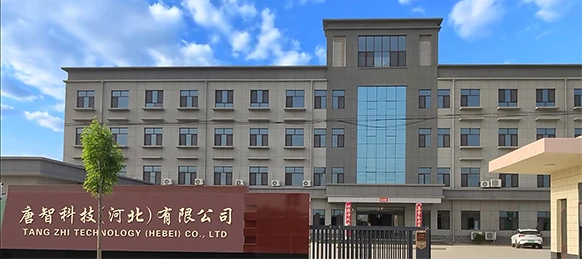
Our 140,000 m² facility in Hebei, China
We don’t just sell starch powder—we guarantee compliance, consistency, and cost savings. Here’s how we deliver:
🏭 World-Class Manufacturing
- Annual capacity: 40,000 tons of starch powder and cellulose derivatives
- Automated lines: 24/7 production with <99.8% uptime
- Quality control: In-line NIR spectroscopy, HPLC for purity verification
- Certifications:
 ISO 9001,
 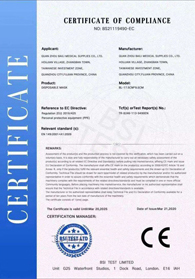 CE,
CE,  FDA Registered
🔍 Rigorous Compliance Framework
- HS code pre-approval: We file binding rulings with US CBP and EU TARIC for your product.
- Documentation: COA, MSDS, and C of Origin aligned with declared HS code
- Customs-ready: Pre-cleared shipments in 95% of cases (vs. industry avg. 70%)
🌍 Supply Chain Resilience
- Multi-origin sourcing: Starch from Thailand, China, Brazil for duty optimization
- Inventory buffer: 3-month stock of top grades to prevent shortages
- Logistics partners: DHL, Kuehne+Nagel for door-to-door delivery
medical-grade-film cellulose-is-soluble-in-water pva2488 pva-24-88
💡 Tariff Engineering Expertise
- HS code optimization: Reclassification from 1108.12 (native) → 1108.13 (tapioca) saves 3–5% duty
- Free trade zones: Staging in Singapore or Rotterdam to avoid VAT deferral
- Duty drawback: Helping clients reclaim 2–4% of paid duties on re-exported goods
🏆 Industry Recognition

Top 5% of Chinese starch suppliers by export volume and compliance standards (source: China Customs Data)

“Their starch blends reduced our adhesive viscosity issues by 60%.”
—Plant Manager, Asian Adhesives Ltd.

“Custom HS code guidance cut our EU import duties by €120K/year.”
—Finance Director, European Food Group
Our 5-Step Collaboration Process: From Inquiry to Delivery
We’ve streamlined our process to eliminate guesswork and ensure a seamless, transparent experience. Here’s how it works:
1. Inquiry & Spec Review
2. Prototyping
3. Production
4. Quality Inspection
5. Delivery
Step 1: Inquiry & Spec Review (24–48 Hours)
- Submit your product specs (use, HS code intent, viscosity, purity, certifications).
- We conduct a free HS code pre-assessment and tariff analysis.
- You receive a non-binding quote with HS code recommendation and cost breakdown.
Step 2: Prototyping (7–14 Days)
- We produce a 5–50kg sample in our lab.
- Sample undergoes viscosity, microbial, and purity testing per your specs.
- You approve or request adjustments—no obligation to proceed.
Step 3: Production (30–60 Days)
- Contract signing and 30% deposit.
- Real-time production tracking via our portal (photos, test reports).
- Monthly progress reports and quality alerts.
Step 4: Quality Inspection (3–7 Days)
- Third-party SGS or Intertek inspection (optional but recommended).
- Full COA, MSDS, and C of Origin issued and uploaded to portal.
- Pre-shipment photos and loading videos provided.
Step 5: Delivery (7–21 Days)
- Door-to-door delivery via DHL, Kuehne+Nagel, or your nominated forwarder.
- Tracking updates and customs clearance confirmation.
- Final invoice with HS code and duty breakdown.
⏱️ Timeline Savings:
- Prototyping: 7 days (vs. industry 14–21 days)
- Production: 30–60 days (vs. 90+ days for high-customization orders)
- Total time: 6–10 weeks from inquiry to delivery (vs. 12–16 weeks elsewhere)
Frequently Asked Questions (Answered Upfront)
❓ Can I use the same HS code for all starch powders?
No. Starch HS codes depend on:
- Source: Corn (1108.12), tapioca (1108.13), potato (1108.14), rice (1108.19)
- Modification: Native vs. pre-gelatinized vs. oxidized
- Use: Food (1108.19), feed (2309.90), industrial (1108.20)
❓ How do I know if my starch is food-grade or industrial-grade?
Food-grade starch (HS 1108.19) must meet:
- Purity: ≥90% starch content
- Microbial limits: E. coli <10 MPN/g, Salmonella absent
- Heavy metals: Arsenic ≤1 ppm, Lead ≤2 ppm
- Certifications: FDA 21 CFR, EU 1332/2008, JECFA
❓ What documents do I need to declare the correct HS code?
Mandatory documents:
- Commercial Invoice: Must state intended use (food/industrial) and HS code.
- Certificate of Analysis (COA): Purity, viscosity, microbial load—must match declared HS code.
- Certificate of Origin: For FTA eligibility (e.g., China-ASEAN FTA).
- MSDS (Material Safety Data Sheet): Required for industrial shipments in the EU/US.
- Phytosanitary Certificate: If shipping from China to EU (required for all agricultural products).
❓ Can you help me reduce tariffs by reclassifying my starch?
Yes. Common tariff-saving strategies:
- Reclassify native corn starch (1108.12 → 1108.13): If sourced from Thailand (tapioca) or Brazil (cassava), duty drops from 5% → 0% in the US/EU.
- Use Free Trade Zones: Staging in Singapore or Rotterdam defers VAT in the EU.
- Duty drawback: Claim back 2–4% of duties on re-exported goods (e.g., starch used in exported processed foods).
- Tariff engineering: Blending starch with guar gum (HS 1302.32) can shift classification to a lower-duty category.
❓ What’s the difference between modified and native starch in terms of HS codes?
Native starch (HS 1108.12–1108.19):
- Unmodified, 98%+ starch content
- Duty: 0–5% (food-grade) or 5–10% (industrial)
- Use: Bakery, sauces, instant noodles
- Chemically/physically altered (e.g., pre-gelatinized, oxidized)
- Duty: 5–15% (depends on modification)
- Use: Adhesives, pharmaceutical binders, low-viscosity food applications
❓ Do you offer private-label or OEM starch powder?
Yes. We provide:
- Custom branding: Bag printing, color customization
- Private-label: Your logo, your COA template
- OEM/ODM design: Custom formulations (e.g., starch + xanthan gum blends)
- Bulk repackaging: 1000kg FIBC → 25kg retail bags
❓ What’s your minimum order quantity (MOQ)?
Standard grades: 1000kg (20 x 50kg bags)
Custom blends: 500kg (for food-grade)
Industrial grades: 2000kg
Prototyping: 5–50kg (free, no obligation)
❓ How do you ensure quality consistency?
Our quality system:
- In-line testing: NIR spectroscopy for moisture/purity every 30 minutes
- Batch certification: Each lot tested for viscosity, microbial load, heavy metals
- Third-party audits: Annual SGS/Intertek inspections
- Documentation: COA issued within 48 hours of production
Ready to Optimize Your Starch Powder Supply Chain?
From HS code compliance to custom formulations, we deliver starch powder solutions that reduce costs, eliminate delays, and boost your bottom line.
Limited-time offer: First-time buyers receive 10% off on MOQ orders + free HS code compliance review.
Still unsure? Book a 15-minute call with our trade compliance team:
⏰ Schedule a Call