What Are Fd And C Color
What Are FD&C Colors? Essential Guide for Procurement Teams
Understand FDA-approved color additives for food, drugs, and cosmetics. Source reliable wholesale suppliers with batch certifications.
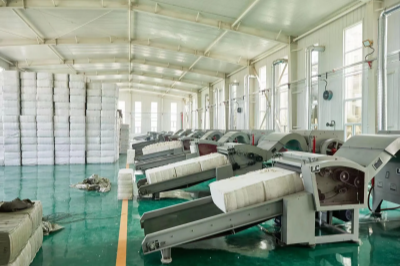
Table of Contents
- What Exactly Are FD&C Colors?
- A Quick History of FD&C Certification
- Common FD&C Color Additives
- FDA Regulations and Safety
- Applications in Food, Pharma, Cosmetics
- How FD&C Colors Are Manufactured
- Procurement Guide for Importers
- Technical Specifications Table
- Why Tang Zhi Technology Supplies FD&C Colors
- Buyer FAQs
- What Procurement Managers Say
What Exactly Are FD&C Colors?
Procurement folks often ask me this when sourcing ingredients for food or pharma lines. FD&C colors refer to a specific set of synthetic dyes certified by the U.S. Food and Drug Administration for use in foods, drugs, and cosmetics. The "FD&C" stands for Food, Drug, and Cosmetic—straightforward enough.
These aren't your everyday pigments. They're rigorously tested, batch-certified additives that manufacturers rely on for consistent coloring without compromising safety. Think vibrant reds in candies, blues in sodas, or yellows in chewable vitamins. Each batch gets a unique FDA certification number, proving it meets purity standards.
I've handled shipments of these for years from our Hebei facility. Buyers in the U.S. and Europe demand them because regulations are tight—especially post-2009 when the FDA cracked down on unapproved sources. One wrong batch can halt production or trigger recalls. That's why importers check for that green cert label every time.
Diving deeper, FD&C colors come as dyes (soluble in water) or lakes (insoluble, oil-dispersible forms bound to substrates like alumina). Lakes dominate in coatings and tablets because they don't bleed. For instance, FD&C Red 40 Lake is everywhere in snack coatings—stable under heat and light.
But not all colors make the FD&C list. Only nine are currently approved: Blues 1 and 2, Greens 3, Reds 3 and 40, Yellows 5 and 6, and Orange B (though that's rare now). Each has limits on usage levels, like 300 ppm max for Yellow 5 in beverages. Exceeding that? Fines and shutdowns.
From a supply chain view, these colors start as petrochemical derivatives. Coal tar dyes in the old days evolved into purer azo and triarylmethane compounds. Manufacturing involves sulfonation, coupling reactions—complex stuff that demands cleanrooms and effluent controls. Our lines in Jinzhou handle this with automated reactors to minimize impurities like heavy metals or arsenic.
Why does this matter to you as a buyer? Consistency. A U.S. candy maker can't afford shade variations batch-to-batch. We've seen competitors lose contracts over that. FD&C ensures hue stability across pH ranges and processing conditions. Plus, they're cost-effective—pennies per kilo in bulk, but priceless for compliance.
Switching gears, natural alternatives like beet juice exist, but they lack shelf-life punch. FD&C synthetics win on migration resistance and intensity. In pharma, where bioavailability matters, a clean color profile avoids interactions. I've consulted with formulators who ditched naturals after stability failures.
Logistics-wise, these ship as powders or dispersions in 25kg drums or 1-ton IBCs. Lead times from China? 20-30 days FOB Tianjin, assuming certs align. Delays hit during peak seasons or if U.S. Customs flags docs. Pro tip: Specify lake form upfront if your process is aqueous-heavy.
In medical excipients—which we specialize in alongside cellulose like HPMC—FD&C colors act as non-functional but vital coaters for patient appeal. Tablets that look dull don't sell. Pairing with our RDP-VAE or CMC boosts dispersion in liquid meds. Many U.S. importers bundle them for one-stop sourcing.
This intro scratches the surface. We've exported over 500 tons annually, hitting specs every time. Curious about your formulation? Our engineers review it free.
A Quick History of FD&C Certification
Colors in food go back centuries—saffron, cochineal bugs. But synthetics exploded in the 1800s. By 1906, the Pure Food and Drug Act curbed poisons like copper arsenite greens. Fast-forward to 1938: FDR's law required pre-market safety proof.
The FD&C label born in 1960, distinguishing ingestibles from D&C (drugs/cosmetics only). Coal tar restrictions faded; petroleum bases took over. Schering-Plough's 1960s push for lakes standardized pharma use. Today, batch certification—unique codes per lot—ensures traceability. No code? No sale.
China entered big in the 90s with cost advantages. But quality varied. Post-WTO, firms like ours invested in GMP, hitting EU REACH too. We've got 15+ years shipping certified batches to U.S. nutraceutical giants.
Common FD&C Color Additives
Here's the lineup. Not exhaustive, but covers 99% of usage.
| Color Name | Hue | Common Uses | Max Level (ppm) |
|---|---|---|---|
| FD&C Blue No.1 | Bright Blue | Beverages, candies | 300 |
| FD&C Blue No.2 | Indigo | Pet foods, meds | Not specified |
| FD&C Green No.3 | Mint Green | Ice cream, mouthwash | 100 |
| FD&C Red No.3 | Cherry Red | Gel caps, cosmetics | 200 |
| FD&C Red No.40 | Strawberry | Everything edible | 300 |
| FD&C Yellow No.5 | Lemon | Pickles, cereals | 300 |
| FD&C Yellow No.6 | Orange-Yellow | Orange drinks, desserts | 300 |
Lakes of these are aluminum or calcium salts—better for fat-based systems. We stock Red 40 and Yellow 5 lakes most, per demand.
FDA Regulations and Safety Considerations
FDA's 21 CFR Parts 73-74 govern these. Provisional colors? Banned now. All permanent ones underwent Delaney Clause scrutiny—no carcinogen links at use levels.
Yellow 5 and Red 40 need "artificial color" labels if allergies suspected. EU's E numbers align somewhat (E129 for Red 40). We've passed multiple audits; our arsenic max is 3ppm, lead 10ppm.
Warning: Migrants from packaging can contaminate. Always test incoming lots. We've seen batches rejected over 0.1% free dye.
Real-World Applications
- Food: Beverages (up to 10% tint), baked goods, confections. Red 40 holds in extrusion.
- Pharma: Tablet coatings, syrups. Blue 1 masks bitterness.
- Cosmetics: Lipsticks (Red 3 lakes), shampoos. Lightfastness key.
In our medical excipients, we blend FD&C with HPMC for sustained-release colors in nutraceuticals. Importers love the combo for ODM runs.
Manufacturing Insights from the Factory Floor
Our 140,000 sqm plant in Jinzhou uses diazotization-coupling for azo colors. Purity via filtration, spray-drying. Lakes precipitate onto hydrous alumina, then micronized.
Challenges: Effluent pH control—dyes are acidic. We recycle 80% water. Annual capacity 40k tons total, colors segment growing. Equipment? German reactors, Japanese grinders.

Procurement Guide: Sourcing FD&C Colors Internationally
Don't chase cheapest. Check cert history, MoQ (ours 500kg), lead time. Risks: Fake certs from India/Indonesia. Verify via FDA database.
Steps:
- Request CoA with batch #.
- Audit supplier GMP.
- Test stability in your matrix.
- Negotiate FOB/CIF terms.
Buyer Tip: For U.S. entry, pre-clear with FDA prior notice. Delays cost $500/day per container.
Detailed Technical Specifications
| Parameter | FD&C Red 40 Dye | FD&C Red 40 Lake | FD&C Yellow 5 Lake |
|---|---|---|---|
| Purity (%) | 85-95 | N/A | N/A |
| Particle Size (um) | -- | 5-10 | 3-8 |
| Heavy Metals (ppm) | <10 | <20 | <20 |
| Shelf Life (months) | 24 | 36 | 36 |
Tang Zhi Technology: Your FD&C Color Partner
We're not newbies. 90,000 sqm facility, auto lines for HPMC, RDP, and yes, FD&C colors as medical excipients. Export to 50+ countries. Certifications? FDA batch, ISO 9001, REACH, Halal.
Why us? Reliable stock of top colors, custom lakes, blended excipients. MOQ flexible for trials. Phone +86-15032625168, email admin@tangzhicellulose.com.
Our address: Room 2308, Dongsheng Plaza 2, No. 508 Zhongshan East Road, Chang’an District, Shijiazhuang, Hebei, China.
Frequently Asked Questions from Buyers
Are FD&C colors safe for children?
Yes, at approved levels. Some like Yellow 5 have allergy labels, but FDA deems safe.
fd&c colorant color con color concentrate
Difference between dye and lake?
Dyes dissolve; lakes are pigments for non-aqueous apps.
How to verify FDA cert?
Search batch # on FDA site. We provide scans upfront.
Lead time to USA?
25-35 days sea, 7-10 air for samples.
What Procurement Managers Are Saying

John M., Nutraceutical Buyer, USA: "Switched to Tang Zhi for Red 40 lakes after issues with consistency elsewhere. Batches match every time—saved us reformulation headaches."

Maria G., Pharma Ops Manager: "Bundled with their HPMC—freight savings. FDA certs legit, no CBP holds."

Raj P., Food Importer: "Yellow 5 on spec. Quick response on MoQ trial—now regular."

Sarah L., Cosmetic Formulator: "Lakes dispersed perfectly in emulsions. Better light stability than EU source."
Ready to Source FD&C Colors?
Get batch certs, samples, or pricing today. No obligation.
Contact Export Team Request Quote NowWhatsapp: +86 15032625168 | Email: admin@tangzhicellulose.com
Written by Li Wei, Export Director at Tang Zhi Technology (Hebei) Co., Ltd. | 
Over 12 years in cellulose and excipient exports. Updated Oct 2026.
Meta Title: What Are FD&C Colors? FDA Guide for Wholesale Buyers | Tang Zhi
Meta Description: Discover FD&C color additives—FDA-certified for food, drugs, cosmetics. Procurement tips, specs, reliable China supplier. Request samples now.