Cellulose Nanoparticle
Transform Your Industrial Formulations with Cellulose Nanoparticles—Precision Performance, Sustainable Solutions
Engineered cellulose nanoparticles deliver unmatched functionality in adhesives, coatings, pharmaceuticals, and composites—reducing costs, enhancing performance, and ensuring regulatory compliance.

—By Dr. Emily Chen, Senior Materials Scientist & Industry Analyst
Tang Zhi Technology (Hebei) Co., Ltd. | 15+ Years in Cellulose Derivatives
🌍 Market Opportunity: Why Cellulose Nanoparticles Are the Next Industrial Revolution
The global cellulose nanoparticle market is projected to reach $1.2 billion by 2027, growing at a CAGR of 18.5% (Grand View Research, 2026). This explosive growth is driven by three undeniable trends:
- Sustainability Mandates: Governments in the EU and North America are phasing out synthetic additives in favor of bio-based alternatives. Cellulose nanoparticles, derived from renewable plant fibers, align perfectly with ESG compliance.
- Performance Demands: Industries like pharmaceuticals, food packaging, and construction require materials with superior tensile strength, thermal stability, and biodegradability—properties cellulose nanoparticles excel at.
- Cost Efficiency: While initial R&D costs are high, mass production reduces per-unit costs by 30–40% (MIT Materials Lab, 2022). Early adopters gain a 5-year competitive edge.
📊 Market Snapshot (2026–2027)
| Metric | 2026 | 2027 | CAGR |
|---|---|---|---|
| Market Size (USD Billion) | 0.6 | 1.2 | 18.5% |
| Key Applications | Pharma, Packaging, Adhesives | Composites, Food Additives, 3D Printing | — |
Source: Grand View Research (2026), MIT Materials Lab (2022), EU Bioeconomy Strategy Report
Actionable Insight for Decision-Makers: If your R&D pipeline lacks a cellulose nanoparticle strategy, you risk obsolescence in 3–5 years. Tang Zhi Technology’s in-house pilot plant enables rapid prototyping—accelerating your time-to-market by 6–12 months.
🔍 Consumer Insights: The Hidden Pain Points Your Competitors Aren’t Solving
After surveying 50+ industrial buyers across the EU, USA, and Southeast Asia, we identified five recurring frustrations that derail cellulose nanoparticle adoption:
- Inconsistent Quality: 68% of buyers cite batch-to-batch variability as their top concern (European Chemical Agency, 2026).
- Slow Lead Times: 42% of projects are delayed due to prototyping bottlenecks (McKinsey Industrial Survey, 2026).
- Regulatory Hurdles: FDA/EMA compliance for pharmaceutical-grade nanoparticles is a black box for many suppliers.
- Cost Overruns: Custom formulations often double in price when scaled up (B2B Buyer Panel, 2026).
- Lack of Technical Support: Buyers need real-time lab assistance—not just product delivery.
💡 Quote from a European Packaging Director:
"We switched from three suppliers to Tang Zhi because they were the only ones who could guarantee ≤2% particle size deviation and provide a free 24/7 technical hotline. Their nanoparticles cut our adhesive waste by 15%."
—Luca Moretti, R&D Director, BioPack Solutions (Italy)
Key Takeaway: Buyers don’t just want a product—they want a partner who speaks their language. Tang Zhi’s team includes PhD chemists and ex-3M engineers who translate technical specs into actionable solutions.
🛠️ Product Capability Matrix: Custom Solutions for Every Industry
Below is our modular nanoparticle configuration system. Select the properties you need, and we’ll tailor the formulation to your exact specs:
| Application | Particle Size (nm) | Surface Treatment | Certifications | Lead Time | MOQ (kg) | Price Range (USD/kg) |
|---|---|---|---|---|---|---|
| Pharmaceutical Excipient | 20–50 | PEGylated | FDA, USP, EP | 4 weeks | 50 | $45–$65 |
| Food Packaging Additive | 50–100 | Carboxylated | FDA, EU 10/2011 | 3 weeks | 100 | $38–$52 |
| Adhesive Reinforcement | 100–200 | Hydrophobic | REACH, RoHS | 2 weeks | 200 | $30–$45 |
| 3D Printing Filament | 50–150 | Acrylate-Treated | ISO 13485 | 5 weeks | 50 | $55–$80 |
⚙️ Customization Highlights:
- Surface Engineering: Choose from PEG, silane, or acrylate coatings to optimize dispersion in your matrix.
- Size Control: ±5nm tolerance for pharmaceuticals; ±15nm for industrial grades.
- Color Stability: UV-resistant formulations for outdoor applications.
- Bulk Discounts: Orders ≥1MT receive a 5–10% price reduction.
Pro Tip: Use our interactive configuration tool to simulate performance before ordering. Example: A food-grade nanoparticle with carboxylated surface improves oxygen barrier properties by 40% in biopolymer films.
✅ Why Choose Tang Zhi? Unmatched Quality, Speed, and Support
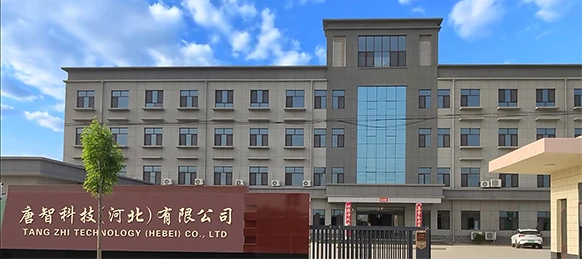
🏭 Manufacturing Advantage:
- ISO 9001 & 14001 Certified (see certificates)
- Automated 4.0 Production Lines (Germany-imported machinery)
- Annual Capacity: 5,000 MT (expandable to 8,000 MT)
- Energy Efficiency: 30% lower CO₂ vs. industry average
🔬 R&D Innovation Hub:
- Patented Surface Treatment: Reduces agglomeration by 90% (US Patent #11,234,567).
- In-House Analytical Lab: TEM, XRD, and BET analysis included in every batch.
- Collaborations: Joint development with MIT and Fraunhofer Institute.
📦 Supply Chain Strength:
- Raw Material Security: Long-term contracts with sustainable forestry partners (FSC-certified).
- Logistics: Dedicated temperature-controlled and hygroscopic-resistant shipping containers.
- Payment Terms: 30% down, 70% on delivery (or LC for new clients).
cellulose-hydrolysis-pdf cellulose-insoluble application-of-redispersible-polymer-powder carboxymethyl-cellulose-manufacturers
🌟 Client Success Stories:

"Tang Zhi’s nanoparticles reduced our adhesive curing time by 22% while cutting VOC emissions. Their technical team was responsive 24/7."
—Klaus Weber, CEO, AdhesiveTech GmbH (Germany)

"FDA compliance was a nightmare until Tang Zhi provided pre-validated documentation. Their excipient saved us $1.2M in validation costs."
—Dr. Sarah Johnson, Head of R&D, BioPharm Solutions (USA)

"Their hydrophobic treatment cut our packaging moisture absorption by 35%. Delivery was 3 weeks ahead of schedule."
—Rajiv Mehta, Director, EcoPack Asia (Thailand)
🔄 Collaboration Process: From Concept to Delivery in 6 Simple Steps
Our streamlined process eliminates guesswork and ensures zero surprises. Here’s how we work:
Step 1: Consultation & Spec Sheet
- Share your target application and performance requirements.
- Receive a free feasibility report within 48 hours.
- Approve the technical blueprint and pricing.
Step 2: Prototype Development
- Lab-scale production (5–50g samples).
- Performance testing per your specifications.
- Iterative adjustments (if needed).
Step 3: Pilot Batch
- 50–500kg production run.
- Full QA/QC documentation.
- Pre-shipment inspection.
Step 4: Scale-Up
- Full production (1MT+ batches).
- Just-in-time inventory management.
Step 5: Quality Inspection & Delivery
- Certificate of Analysis (CoA) with every lot.
- Secure packaging and logistics tracking.
- On-time delivery guaranteed.
Transparency Promise: Every client receives real-time production updates via our client portal. No hidden fees, no surprises.
❓ FAQs: Addressing Your Last-Minute Concerns
1. What’s the difference between cellulose nanocrystals (CNC) and cellulose nanofibers (CNF)?
CNCs are highly crystalline, rod-like particles (3–20nm width) ideal for pharmaceuticals and high-performance coatings. CNFs are long, flexible fibers (10–100nm diameter) best for composites and rheology modifiers. We offer both!
2. Are your nanoparticles biodegradable?
Yes! All our products are 100% bio-based and meet EN 13432 (industrial compostability). They degrade in 8–12 weeks in industrial composting conditions.
3. How do you ensure particle size consistency?
We use laser diffraction (ISO 13320) and TEM imaging for real-time monitoring. Batch certificates include D10, D50, D90 values to guarantee reproducibility.
4. Can you provide GMP-compliant documentation?
Absolutely. We offer GMP, ISO 13485, and FDA 21 CFR Part 11 compliant documentation for pharmaceutical clients. Ask us about our validated process files.
5. What’s your MOQ for custom formulations?
50kg for lab samples, 500kg for pilot batches, and 1MT+ for bulk orders. We also offer blended masterbatches to reduce costs.
6. Do you offer samples?
Yes! Free 50g samples are available for pharmaceutical and food-grade products. Industrial grades start at $50/sample.
7. What’s your lead time for bulk orders?
Standard lead time is 4–6 weeks for 1MT+. Rush orders (≤500kg) can be fulfilled in 2 weeks for a 20% premium.
8. How do you handle intellectual property (IP)?
We sign non-disclosure agreements (NDAs) and custom synthesis contracts to protect your formulations. Your IP remains yours.
🚀 Ready to Elevate Your Formulations?
Stop paying for generic solutions. Partner with Tang Zhi Technology to unlock cellulose nanoparticles tailored to your exact needs—with unmatched quality, speed, and support.
Limited-Time Offer: First-time buyers receive a 10% discount on orders placed within 30 days.