Practical Use of Gypsum Retarders
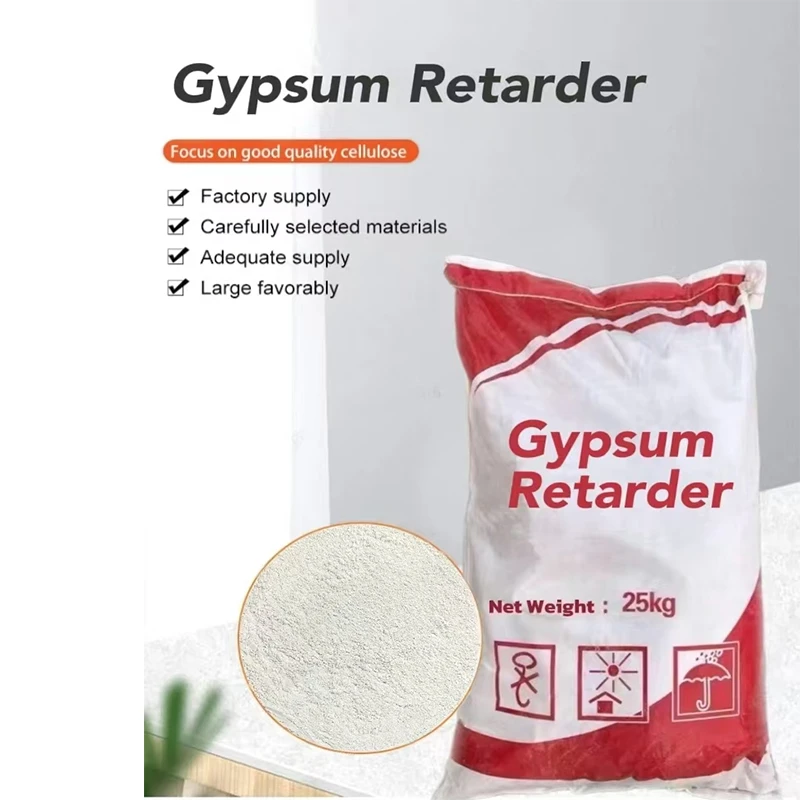
Plastering retarder is widely used in modern construction to improve the handling of plaster. Its primary function is to slow the setting time, giving workers more flexibility to mix, apply, and shape plaster without rushing. For large walls, ceilings, or detailed decorative surfaces, a plastering retarder ensures smooth application and a uniform finish.
By using plastering retarder, contractors can reduce the risk of cracks and uneven surfaces. It also minimizes waste, as there is less need to discard plaster that sets too quickly. For both interior and exterior projects, a plastering retarder enhances work efficiency and overall quality.
In addition, plastering retarders make it easier to coordinate multiple workers on-site. Large projects often require teams to apply plaster simultaneously. With extended setting times, plastering retarder allows everyone to work in sync, avoiding mistakes caused by rapid hardening.
Contractors also appreciate that plastering retarder supports better adhesion to substrates. Surfaces remain workable for longer, ensuring plaster bonds correctly to walls or ceilings. This improves durability and reduces maintenance needs over time.
Gypsum Plaster Retarder Improves Finish Quality
A gypsum plaster retarder is essential for achieving a high-quality finish in gypsum-based construction. It slows down the hydration process, giving more time for smoothing and shaping the plaster. Decorative elements, detailed moldings, and intricate designs benefit greatly from this extended workability.
Gypsum plaster retarder also helps prevent shrinkage cracks. As the setting time is prolonged, the plaster has time to cure evenly, reducing stress points that lead to cracks. For residential and commercial projects, this ensures long-lasting surfaces and lower repair costs.
Using gypsum plaster retarder reduces material waste. Workers can take their time applying plaster carefully, avoiding over-mixing or applying too thick layers that set too fast. This makes it practical for both small-scale renovations and large-scale construction projects.
Furthermore, gypsum plaster retarder supports better consistency across batches. For large walls or ceilings, uniform setting prevents color or texture differences, ensuring a professional look. Contractors find this additive invaluable for high-standard finishes.
Most Common Retarder in Gypsum Ensures Precision
The most common retarder in gypsum is widely used due to its reliable performance. It allows precise control over setting times, making it easier to plan work schedules and manage labor. This is especially helpful in intricate or large-scale projects where timing and coordination are critical.
Using the most common retarder in gypsum improves surface smoothness. Workers can achieve sharp edges, smooth curves, and even decorative patterns without the plaster hardening prematurely. It also facilitates easier corrections if adjustments are needed before the material fully sets.
Additionally, this retarder reduces the likelihood of uneven surfaces or lumps. Even inexperienced workers can achieve professional results because the material remains workable longer. This makes it practical for general contractors, renovation specialists, and DIY enthusiasts alike.
In terms of sustainability, the most common retarder in gypsum reduces waste by allowing careful, measured application. Less discarded material means lower costs and a smaller environmental footprint. For builders aiming for eco-friendly projects, this additive is a reliable choice.
Gypsum Board Fire Retardant Enhances Safety
A gypsum board fire retardant is crucial for safety in residential and commercial buildings. Beyond slowing the setting of gypsum, it provides fire-resistant properties to walls and ceilings. This is particularly important for high-rise buildings, schools, hospitals, and other places where safety regulations are strict.
Gypsum board fire retardant ensures that walls maintain structural integrity longer in the event of a fire, giving occupants more time to evacuate. Its use in modern construction not only improves safety but also increases building durability.
For contractors, using a gypsum board fire retardant simplifies compliance with fire codes and regulations. It can be applied during the manufacturing of gypsum boards or mixed on-site during plastering. This versatility makes it practical for various construction needs.
Moreover, gypsum board fire retardant can be combined with other additives, like plastering retarders, to optimize performance. This allows builders to maintain both extended workability and safety standards, creating more reliable and durable structures.
USG Gypsum Plaster Retarder Supports Modern Construction
USG gypsum plaster retarder is a trusted solution in the construction industry. With its ability to extend workability and improve finish quality, it is widely used in plastering, casting, and drywall applications. It slows the setting process while maintaining adhesion, smoothness, and strength.
USG gypsum plaster retarder allows contractors to handle large projects efficiently. Extended working time means teams can coordinate better, reduce mistakes, and minimize material waste. Decorative projects, ceilings, moldings, and wall finishes all benefit from this precision control.
In addition, USG gypsum plaster retarder is compatible with other gypsum-based additives, ensuring versatility in modern construction practices. Its practical benefits include reduced cracks, smoother surfaces, and better durability of finished structures.
For those looking to enhance construction efficiency and quality, USG gypsum plaster retarder is a reliable choice. Visit our website today to explore product options and place an order. By using USG gypsum retarders, you ensure smoother application, improved safety, and long-lasting results.
USG Gypsum Plaster Retarder FAQs
What is a plastering retarder used for?
It slows down the setting of plaster, extending workability and allowing precise application for smooth and detailed finishes.
How does gypsum plaster retarder improve construction quality?
By delaying the setting time, it reduces cracks, improves surface smoothness, and ensures consistent results across walls and ceilings.
What is the most common retarder in gypsum?
It is a widely used additive that provides reliable control over setting time, enabling precise work on both small and large projects.
Why use gypsum board fire retardant?
It enhances fire safety by slowing the degradation of gypsum boards during a fire, giving occupants more time and ensuring building durability.
Where can I buy USG gypsum plaster retarder?
High-quality USG gypsum retarders can be purchased through certified suppliers or official company websites. Browse options online for convenient ordering and delivery.
-
HPMC High-Performance Thickener | Hebei TangzhiNewsMar.06,2026
-
Wholesale Water Reducing Admixture for Special Cement: Performance and Market InsightsNewsFeb.28,2026
-
The Complete Guide to HPMC: Types, Applications, Grades, and Manufacturing InsightsNewsFeb.28,2026
-
Redispersible Polymer Powder: Types, Applications, and Performance AdvantagesNewsFeb.28,2026
-
Hydroxymethyl Ethyl Cellulose (MHEC): Properties, Applications, and Market InsightsNewsFeb.28,2026
-
Hydroxyethyl Cellulose: Applications, Performance, and Buying GuideNewsFeb.28,2026