The Safe Using of Hydroxyethyl Starch
In the vast landscape of industrial and consumer products, from the walls of our homes to the food on our plates and the medicines we rely on, a class of modified biopolymers plays a crucial, though often unseen, role. Among these, starch derivatives like hydroxyethyl starch, hydroxypropyl starch phosphate, and the versatile hps (Hydroxypropyl Starch Ether) have become indispensable functional additives. Their ability to thicken, stabilize, retain water, and modify texture has revolutionized formulations across construction, food technology, pharmaceuticals, and personal care. However, with widespread use comes a paramount responsibility: ensuring their safe application.
This article delves into the critical principles governing the safe use of these starch derivatives, exploring the distinct considerations for each type, from the clinical scrutiny surrounding certain hydroxyethyl starch formulations to the food-grade purity required for hydroxypropyl starch phosphate and the performance-driven safety in construction materials using hps. At the heart of this safe and effective utilization lies the expertise of specialized manufacturers. Companies like TANG ZHI TECHNOLOGY (HEBEI) CO., LTD, with their extensive experience in polymer science and a commitment to integrated quality management, exemplify how production excellence forms the foundation of safety.
Understanding the Family: From Hydroxyethyl Starch to Hps
To approach safety intelligently, one must first understand the distinct identities within the modified starch family.
- Hydroxyethyl starch is primarily known as a synthetic colloid used in medical settings as a plasma volume expander. Its safety profile in this critical, parenteral application has been the subject of extensive international review, leading to significant restrictions due to risks of kidney injury and coagulation issues in certain patient populations.
- This highlights a cardinal rule: the safety of a starch derivative is intensely context-dependent, dictated by its route of administration, molecular characteristics, and dosage. In stark contrast, hydroxypropyl starch phosphateis a food-grade modifier. The introduction of phosphate ester groups enhances its stability, clarity, and tolerance to high-temperature processing, making it ideal for use in sauces, pie fillings, and dairy products. Its safety is governed by food additive regulations, which stipulate strict purity standards, absence of toxic residuals, and allowable daily intakes.
TANG ZHI TECHNOLOGY (HEBEI) CO., LTD, operating from its 140,000-square-meter factory complex with automatic production lines, applies the same rigorous discipline to its starch ether production as it does to its flagship cellulose products like HPMC and CMC. The careful selection of raw materials—starting with high-quality starch—and processes managed directly by senior executives form a solid foundation for quality assurance, which is the first and most critical step in ensuring a safe, predictable product for any application.
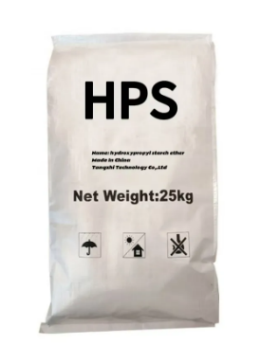
The Duality of Hydroxyethyl Starch
The story of hydroxyethyl starch serves as a powerful case study in application-specific safety.
- In clinical medicine, specific hydroxyethyl starchsolutions were developed to mimic the osmotic properties of human albumin for treating hypovolemia. However, large-scale studies revealed a risk profile that necessitated a major regulatory re-evaluation. The safety concerns centered on its accumulation in tissues, potential for causing pruritus, and, most significantly, renal impairment and increased bleeding risk in critically ill patients, particularly those with sepsis. This underscores that safety for a modified starch—or any polymer—is not static but evolves with evidence.
- The hydroxyethyl starchused in other contexts, such as a paper coating agent or a component in biodegradable films, presents a wholly different risk assessment, as it is not introduced into the bloodstream. For manufacturers, the lesson is the necessity of absolute clarity in product specification and intended use.
TANG ZHI TECHNOLOGY, with its strong technological background and professional team of researchers, leverages its laboratories and testing facilities to characterize products thoroughly. This ensures that a product destined for an industrial application meets the correct specifications for that purpose and is never misapplied in a sensitive field like medicine without explicit, verified suitability.
Ensuring Safe and Effective Performance with Hps in Industrial Formulations
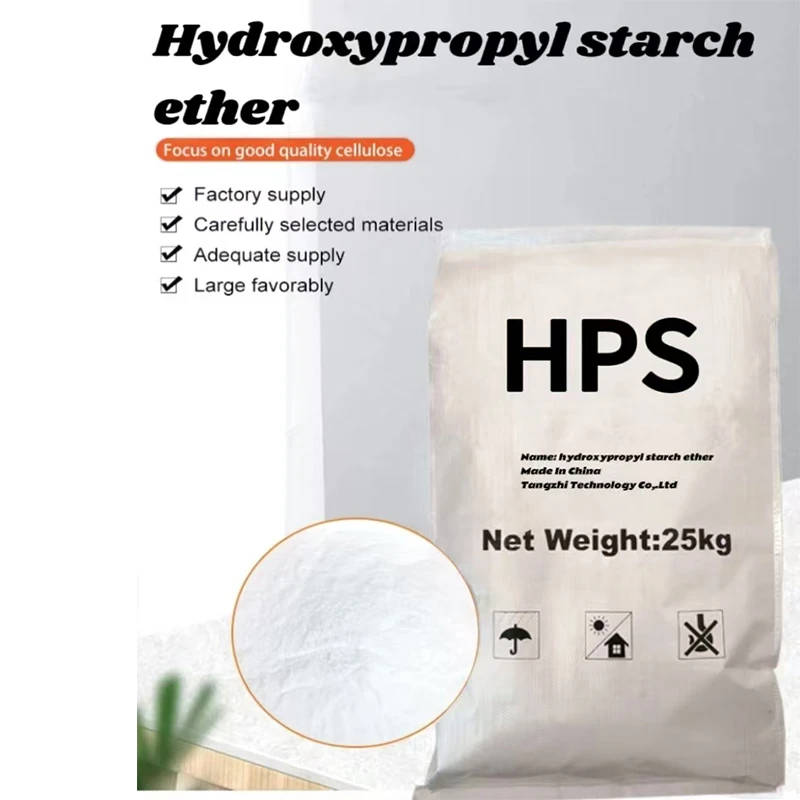
In industrial applications, particularly construction, the safe use of hps (Hydroxypropyl Starch Ether) is intrinsically linked to its performance and handling. hps is a key additive in dry-mix mortars, plasters, and tile adhesives, where it acts as a thickener and water-retention agent. Its safety considerations are multifaceted.
- For the end-user (the building occupant), safety is achieved through the complete integration and inertness of the hpswithin the cured material. It contributes to a durable, mold-resistant wall or floor by ensuring proper cement hydration, leaving no volatile organic compounds or leachable toxins.
- For the construction worker, safety involves handling a dry powder. Here, the physical form of the hpsis important. A low-dusting, easy-to-disperse product minimizes airborne particulates, protecting respiratory health. This is where advanced manufacturing and packaging make a direct impact.
- Furthermore, by improving the workability and anti-sag properties of mortars, hpsenhances application safety, reducing physical strain and the risk of errors. The safe performance of hps is thus guaranteed by its consistent quality. Variations in viscosity, solubility, or chemical composition can lead to unpredictable mortar behavior, potentially compromising the integrity and safety of the construction. This is why partnership with a technically proficient manufacturer is crucial.
TANG ZHI TECHNOLOGY (HEBEI) CO., LTD works closely with customers to develop customized solutions. Their ability to derive a large number of product models and maintain superior performance ensures that the hps delivered is precisely suited to the customer's formulation, ensuring predictable, reliable, and safe performance on the job site. Their efficient supply chain management, leveraging proximity to major ports, guarantees that this consistent quality is delivered without delay, supporting safe and efficient construction timelines.
FAQs about Hydroxyethyl Starch Safety
What are the key differences in safety regulation between a food-grade starch like hydroxypropyl starch phosphate and an industrial-grade hps?
The regulatory frameworks are entirely different and application-specific. Hydroxypropyl starch phosphate for food use is governed by food additive regulations, and its specifications include strict limits on heavy metals, residual chemicals, and microbial counts. Industrial-grade hps is regulated under general chemical safety regulations and its safety data sheet (SDS) focuses on occupational exposure limits, handling precautions, and environmental impact.
Should there be concern about topical or industrial uses of hydroxyethyl starch?
Hps and other starch ethers used in construction, cosmetics, or paper are not metabolized in the same way. They are applied externally or incorporated into solid matrices. Their safety assessment is based on local effects, inhalation risk as a dust, and environmental biodegradability.
How does the manufacturing process ensure the safety and consistency of a product like hps?
Safety and consistency are engineered into the process. It begins with high-purity raw materials, including the native starch and reagents. Manufacturers like TANG ZHI TECHNOLOGY invest in world-class equipment and automated production lines to minimize human error and variability. Their laboratories perform batch-by-batch testing against key specifications such as viscosity, pH, ash content, and moisture to ensure every shipment meets the defined safety and performance standards.
Can HPS or similar starch derivatives contribute to mold growth in construction materials?
Properly formulated, they should not. While pure starch can be a nutrient source, the chemical modification in hps significantly reduces its bioavailability to microorganisms. More importantly, in cementitious systems, the high alkalinity (high pH) is inherently biocidal. The primary role of hps is to improve water retention, which ensures complete cement hydration.
What should a manufacturer to guarantee the safe use of hydroxyethyl starch?
A manufacturer should demonstrate:
- Quality Certification:Production under recognized quality management systems (like ISO).
- Transparent Documentation:Comprehensive SDS, technical data sheets, and certificates of analysis for every batch.
- Regulatory Knowledge:Understanding of the relevant regulations for the target market (food, construction, etc.).
- Supply Chain Reliability:The ability to deliver consistently and on time. TANG ZHI TECHNOLOGY (HEBEI) CO., LTD embodies these traits. Their model integrates science, technology, manufacture, and trade.
In conclusion, the safe use of modified starch derivatives is not a single verdict but a continuous, context-driven practice. It bridges the gap between advanced chemical engineering and responsible application. From the stringent, evidence-based controls on hydroxyethyl starch in medicine to the purity mandates for hydroxypropyl starch phosphate in food and the performance-driven reliability of hps in construction, safety is woven into every stage—from molecular design and manufacturing to formulation and end-use. This holistic approach to safety is what distinguishes a mere supplier from a true partner in innovation. As industries continue to seek sustainable, bio-based functional additives, the role of modified starches will only expand. Navigating this future safely requires the partnership of knowledgeable, principled manufacturers dedicated to quality as the non-negotiable foundation of their business.
-
HPMC High-Performance Thickener | Hebei TangzhiNewsMar.06,2026
-
Wholesale Water Reducing Admixture for Special Cement: Performance and Market InsightsNewsFeb.28,2026
-
The Complete Guide to HPMC: Types, Applications, Grades, and Manufacturing InsightsNewsFeb.28,2026
-
Redispersible Polymer Powder: Types, Applications, and Performance AdvantagesNewsFeb.28,2026
-
Hydroxymethyl Ethyl Cellulose (MHEC): Properties, Applications, and Market InsightsNewsFeb.28,2026
-
Hydroxyethyl Cellulose: Applications, Performance, and Buying GuideNewsFeb.28,2026