Anti Foaming Agent Selection Guide
Unwanted foam can reduce processing capacity, cause costly spillovers, hinder heat transfer, and create defects in coatings and finishes. The strategic use of specialized chemical additives is the universal solution, making the science of anti foaming a critical discipline for engineers and formulators. However, navigating the market of anti foaming agent products, also broadly categorized as defoaming agents, requires more than a generic purchase; it demands a careful selection process tailored to the specific chemistry, mechanics, and objectives of the application. Selecting the wrong agent can be as problematic as having no solution at all, leading to inefficacy, separation, or even contamination.
This guide provides a comprehensive framework for choosing the optimal anti foaming agent, ensuring that your investment effectively suppresses foam, enhances process control, and protects your bottom line. The reliability of this critical component in your production chain is underpinned by the expertise of its manufacturer. Companies like TANG ZHI TECHNOLOGY (HEBEI) CO., LTD, with their deep roots in polymer and construction chemical manufacturing, bring a rigorous, science-based approach to auxiliary products. Their commitment to integrated quality control, from raw material selection to final packaging, ensures that performance additives meet the demanding standards of modern industry.
Understanding the Core Challenge: The Science of Anti Foaming
Effective anti foaming begins with understanding foam's nature.
- Foam is a dispersion of gas within a liquid, stabilized by surfactants or proteins that reduce surface tension and form elastic films around air bubbles.
- In industrial contexts, agitation, aeration, boiling, or chemical reactions (like fermentation) introduce gas, while inherent or added surfactants stabilize the resulting bubbles.
- An anti foaming agentworks by counteracting these stabilizing forces. It must be insoluble in the foaming medium, have a lower surface tension than the medium to spread effectively, and enter the foam lamellae to destabilize them. This action causes bubbles to coalesce and burst.
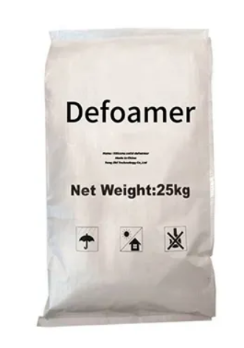
At TANG ZHI TECHNOLOGY, the manufacturing philosophy that ensures the quality of their flagship products like HPMC and PCE is applied with equal rigor. Their factory's automatic production lines and world-class equipment enable the consistent synthesis and blending of defoaming agents, while their laboratories and testing facilities verify each batch's performance against key metrics like foam collapse rate and compatibility.
Key Selection Criteria for an Effective Anti Foaming Agent
Choosing the right agent is a multi-variable equation.
- The first and most critical factor is chemical compatibility. The anti foaming agentmust be chemically inert within your system. It should not react with other process ingredients, cause product discoloration, or affect final properties like adhesion, taste, or transparency.
- The second criterion is the physical state and application method. Agents come as oils, emulsions, powders, or pastes. An easily dispersible emulsion might be ideal for a water-based system, while a powder is necessary for dry-mix products like construction mortars or detergents. The processing conditions—temperature, pH, and shear force—are also paramount.
- Furthermore, consider regulatory compliance. In food, pharmaceutical, or cosmetic applications, the agent must meet relevant purity standardsand be approved for incidental contact or direct use.
- Finally, evaluate performance and cost-in-use. A slightly more expensive agent that works at a lower dosage and lasts longer often provides a lower total operational cost than a cheap, inefficient product.
TANG ZHI TECHNOLOGY, adhering to its "people-oriented, common development" philosophy, works closely with customers to navigate these criteria. Their professional team can recommend from a large number of product models or develop a customized anti foaming agent solution that fits the exact chemical, physical, and regulatory profile of the customer's unique process.
Anti Foaming Agent : Application Considerations and Common Pitfalls to Avoid
Beyond general type, fine-tuning the selection requires diving into application specifics.
- In the food and beverage industry,an anti foaming agent must be food-grade, tasteless, and odorless. It might be used in sugar refining, yeast fermentation, or potato processing to prevent boil-overs and improve filling efficiency. For water-based paints and coatings, the agent must prevent foam during manufacturing and application without causing surface defects like fish-eyes or craters.
- In wastewater treatment, the agent must be effective in the presence of biological activity, surfactants, and solids, and it should not interfere with downstream biological processes.
- A common pitfall across all industries is overdosing.More is not better; excessive anti foaming agent can lead to separation, surface defects, or even act as a foam stabilizer.
- Another pitfall ispoor dispersion, leading to uneven performance.Conducting small-scale, representative trials is non-negotiable. The agent should be added at the optimal point in the process for maximum effectiveness.
TANG ZHI TECHNOLOGY’s services extend beyond mere supply. Their full range of services, from R&D to packaging, includes the technical support to help customers integrate the correctly into their process, ensuring strict quality control in every link and helping them compete more effectively in their market.
FAQs aboutn Anti Foaming Agent
What is the anti foaming?
An anti foaming agent is generally formulated to prevent the formation of foam in the first place, acting as a "foam inhibitor." Many modern products are engineered to perform function.
How do I determine the correct dosage of anti foaming for my process?
The correct dosage is found through systematic laboratory and pilot-scale testing. Start with the supplier's recommended dosage range. Conduct a simple "shake test" or use a dynamic foaming apparatus to simulate your process conditions. The goal is to identify the lowest dosage that achieves the desired level of foam control within the required time frame.
Can an anti foaming agent affect the final properties of my product?
Yes, if selected incorrectly. Incompatible agents can cause hazing, reduce gloss, impair adhesion, create surface tension-related defects, or even separate out of the product over time. This is why compatibility testing is the first and most important step.
Why might a defoaming agent stop working over time?
This is often due to "shear stability." High mechanical shear can permanently emulsify the agent into the medium, breaking its discrete droplets apart so finely that they can no longer function. Chemical attack can also degrade the active ingredients.
What should I look for in a reliable manufacturer of defoaming agents?
Look for a manufacturer with proven technical expertise, a diverse product portfolio, and a commitment to quality and consistency. They should offer more than just a product; they should provide application guidance, regulatory support, and custom formulation capabilities. A supplier like TANG ZHI TECHNOLOGY (HEBEI) CO., LTD embodies these traits. Their strong technological background, professional R&D team, and recognized quality assurance methods ensure high-performance products. Furthermore, their efficient supply chain, inter-linked with major transportation hubs, guarantees the timely delivery of high-quality defoaming agents, providing customers with a true one-stop service and worry-free cooperation for their foam control needs.
The selection of an anti foaming agent is a critical, technical decision that directly impacts process efficiency, product quality, and operational economics. It is not a commodity purchase but a strategic one. By systematically evaluating compatibility, application conditions, regulatory needs, and performance through careful testing, you can identify the optimal defoaming agent that acts as a seamless, effective component within your system. This process is greatly enhanced by collaboration with a technically proficient supplier whose manufacturing excellence guarantees product consistency and whose application expertise can guide you away from common pitfalls.
-
HPMC High-Performance Thickener | Hebei TangzhiNewsMar.06,2026
-
Wholesale Water Reducing Admixture for Special Cement: Performance and Market InsightsNewsFeb.28,2026
-
The Complete Guide to HPMC: Types, Applications, Grades, and Manufacturing InsightsNewsFeb.28,2026
-
Redispersible Polymer Powder: Types, Applications, and Performance AdvantagesNewsFeb.28,2026
-
Hydroxymethyl Ethyl Cellulose (MHEC): Properties, Applications, and Market InsightsNewsFeb.28,2026
-
Hydroxyethyl Cellulose: Applications, Performance, and Buying GuideNewsFeb.28,2026